When I saw the title of the song, I was concerned it was going to be an update of the cheesy, hugely popular song from the 1960s (that I secretly like) but it turned out to be a lovely song by the Mexican indie singer/songwriter Carla Morrison.

When I saw the title of the song, I was concerned it was going to be an update of the cheesy, hugely popular song from the 1960s (that I secretly like) but it turned out to be a lovely song by the Mexican indie singer/songwriter Carla Morrison.
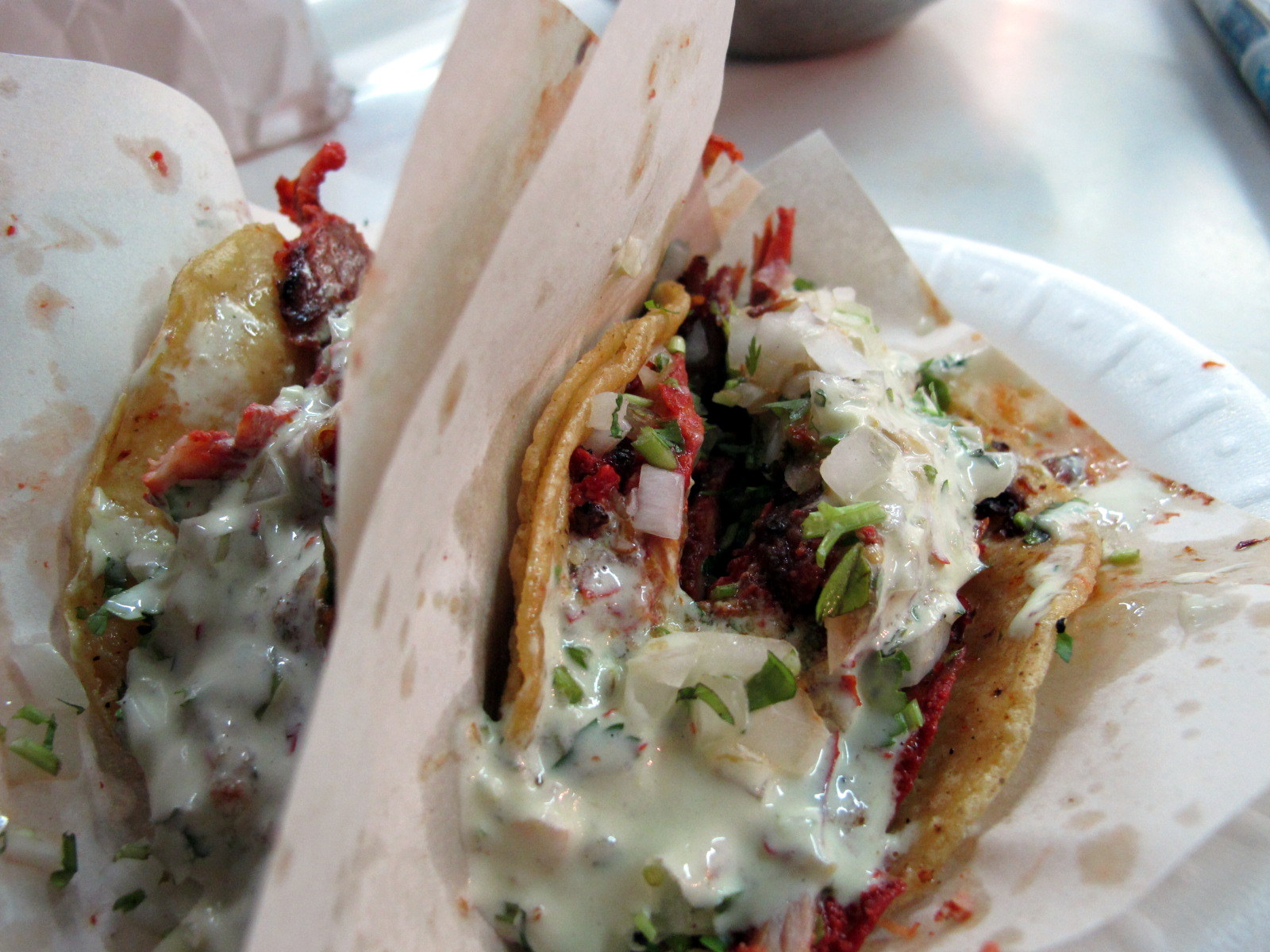

Some years ago, I was telling a friend about my passion for the wonderful tacos I was discovering all over Los Angeles. When he told me he didn’t like tacos because he didn’t like the hard, toasted tortillas they came on, I was mystified. I had never heard of a taco with a hard shell. Later, I learned that some of the old-school taco places in LA serve them that way, to appeal to unsophisticated American tastes. I guess they’re tasty enough in their own right, but they are NOT the real thing.
Dave Miller recently did a piece on tacos in his great blog: Dave Miller’s Mexico. Here is his list of 5 ways you can tell if your taco isn’t really Mexican:
(The photos are from my favorite taquería in Tijuana, Tacos El Gordo… They are most definitely the real thing.)
1. If the beans on that combo plate you ordered are covered in triangles of yellow cheese or the grated four cheese blend you can get at your corner market, you won’t find it south of the border. I have never seen a Mexican variety of yellow cheese. Cheese in Mexico is usually white and if it is served on beans, tends to the crumbly queso fresco type.
2. If your tacos come with any of the following, ground beef, lettuce, tomato slices, grated cheese, yellow wax paper or even turkey, you are not in Mexico. Tacos come with onions and cilantro in Mexico. They are also made with steak and all the other parts of the cow or pig, but never have I seen a taco filled with ground beef.
3. If you can order shrimp, chicken, steak or any other type of fajitas, you won’t be finding that plate in too many taco stands or restaurants in Mexico. Sorry folks, as wonderful as fajitas can be, I’ve never seen fajitas in Mexico. I’m sure they are served somewhere in that great country, but this is a dish popularized by the Orange County restaurant chain El Torito in the 1980’s.
4. When you ask for salsa and the spiciest option you get is Amor or Tapatio bottled sauce, you certainly are not ordering your food in Guadalajara. In Mexico, we love our chiles. Habañeros, jalapeños, serranos and chiles de agua, we love them all, and expect to experience these tastes in, and on our food. Unfortunately, the American palette is not ready for this type of experience so we mostly get a tomato blend spiced up with a little bit of pepper.
5. Finally, when you walk in the door, if the first thing that greets you is a wall of sombreros or a chile in a beach chair, you can bet you’re gonna get a lot of that yellow cheese covered stuff. The derivative here is that if you see folks getting drunk wearing mariachi hats and dancing like loons, you are more likely in Papas-n-Beer or On the Border than a traditional Mexican restaurant.
Here’s a link to Dave’s blog: http://davemillersmexico.wordpress.com/2013/09/25/faux-mexican-five-ways-to-know-your-combo-plate-may-be-wonderful-but-not-available-in-mexico/
Here’s a link to a great article in the blog: Dave Miller’s Mexico.
Faux Mexican? Five ways to know your combo plate may be wonderful, but not available in Mexico….


One of the highlights of the AltaMed East LA Meets Napa fundraiser in July was the shrimp in red salsa served by La Huasteca.
La Huasteca is one of my favorite Mexican restaurants, as you can see from some of my earlier entries in this blog. They are super-friendly and make some of the best moles I’ve ever tasted, and now I have an idea of the magic they can do with seafood. It’s really worth the trip to Lynwood.
Here’s the website: http://www.lahuasteca.com/
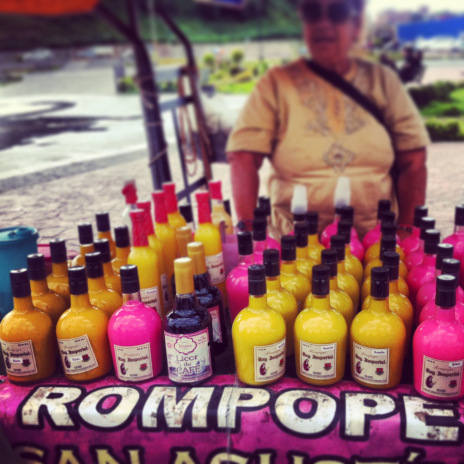
I enjoyed this piece on Rompope from the wonderful blog “Soy Poblana.” I lifted the photo from there.
I’ve only ever had Rompope in ice creams and cakes, so it was interesting to learn that it’s an alcoholic drink from Puebla.

I was tired when I arrived in Guadalajara after a surprisingly long bus ride from Puerto Vallarta (they look so close on the map) so I guess my negotiating skills weren’t at their peak. All the internet reviews I saw for Hotel Casino Plaza were excellent, and I figured I could persuade them to come down on their rate, which was a bit higher than my budget called for. I used all my most persuasive techniques, but they just wouldn’t drop the rate. Rather than go to the trouble of finding another hotel, I gave in, and registered.
What I got was a lovely, modern room in a first class hotel for a little under $50.00… Great value!
The hotel is within easy walking distance of the famous cathedrals and parks in the downtown historic district, and the staff couldn’t have been more pleasant and helpful.
There’s no question that I’ll be staying here on my next visit to Guadalajara.


Yes, there’s a border between the U.S. and Mexico. And yes, there’s a fence along that border. Here’s what it looks like a couple of hours out of Tijuana.


Here’s one you don’t see every day… duck confit tacos.
Now that the East LA Meets Napa fundraising event for AltaMed is nearly 2 months ago, I can admit that this was the best thing I tasted that evening. I’m a fan of Armando De La Torre’s Boyle Heights and Silverlake restaurants, as you can see from my previous posts. Never shy to make tacos with unexpected ingredients, Armando outdid himself with this combination. Duck confit, cucumber chile, and duck chicharron (!) were balanced wonderfully with a reduction of jamaica (the hibiscus tea, not the island.)
It was a great night of food and wine, and these tacos stood out in a field of truly delicious dishes.
Here’s the website: http://www.guisados.co/

Believe it or not, Cinco de Mayo is not Mexican Independence Day. It’s September 16th, although the festivities kick off the night before. El Monumento a la Independencia was inaugurated on September 16, 2010, and has been an icon ever since then.
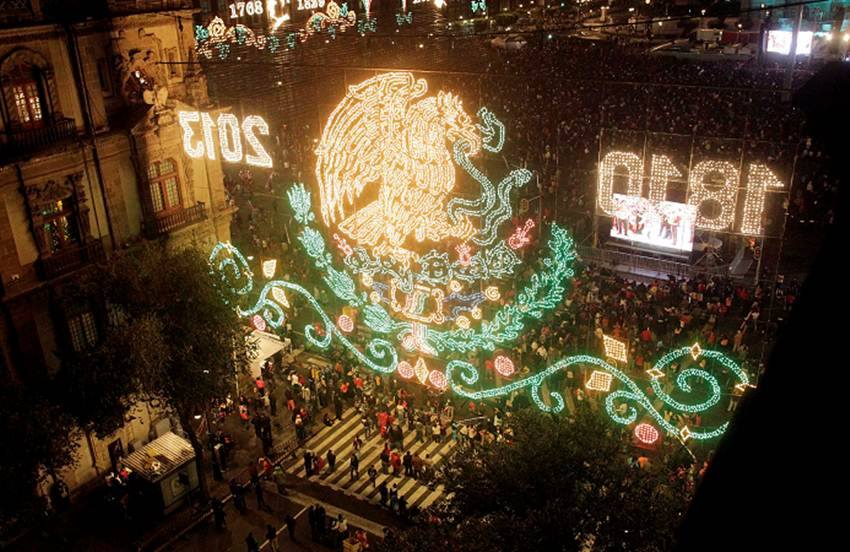
Here’s the story:
In the early nineteenth century, Mexico, with a little influence from the US and France, began talking about a revolt against Spain. Father Miguel Hidalgo from Dolores, Mexico, was a leader of one of the rallying groups. Hidalgo and his officers were planning a revolt for late fall of 1810. The Spanish people found out about the revolt which led the Spanish Government to order the arrest of Hidalgo and his officers. When Hidalgo found out, he called a meeting at his church. He rang the church bell on the night of September 15, 1810 to call his congregation to mass. Here Father Hidalgo rallied the people to fight. He gave the speech which is now known as ‘Grito de Delores’, saying “Viva Mexico” and “Viva la independencia!” These famous words have been remembered and are said each year at the Independence Day celebrations.
Everyone fought together, including the Criollos (wealthy Mexicans of Spanish descent), Mesizos (children born from the marriage of a Spaniard and an Indian), and Indians. Armed with clubs, knives, stone slings, and ancient guns, they fought as they marched to Mexico City. A battle took place in Guanajuato between the Spanish soldiers and Hidalgo’s followers. The army sacked the town, killing the Spaniards. They continued to fight on their way to the capital. When they finally reached Mexico City, the army hesitated before going in to fight and some of them even disserted the army. Before the year was over Father Hidalgo was captured and executed. Some people continued to fight for the cause and Father Hidalgo’s Grito de Delores (Cry of Delores) became the battle cry of the Mexican War of Independence. The people fought for eleven years before they finally won their freedom.
Today Mexican Independence Day is a major celebration in Mexico and is bigger than Cinco de Mayo. It is celebrated with a fiesta (party). The celebrating begins on September 15 (the eve of Independence Day) where crowds of people gather in the zocalos (town meeting place) of cities, towns, and villages. In Mexico City a huge square is decorated with flags, flowers and lights of red, white, and green. People sell confetti, whistles, horns, paper-machete helmets, and toys in the colors of red, white and green. There is also plenty of feasting! When the clock strikes eleven o’clock the crowd gets silent. On the last strike of eleven the president of Mexico steps out on the palace balcony, and rings the historic liberty bell that Father Hidalgo rang to call the people. Then the president gives the Grito de Delores. He shouts “Viva Mexico” “Viva la independencia” and the crowd echoes back. People do this at the same time all across Mexico. While the crowd says this they fill the air with confetti, streamers and hoopla. Castillos explode in showers of red, white, and green. The actual day of September 16 is similar to July Fourth in the US. There are rodeos, parades, bullfights, horseback rider performances and grand feasts. The statues in memory of Father Hidalgo are decorated with red, white, and green flowers. The Mexican Flag is made up of green, white, and red. The green is on the left side of the flag and symbolizes independence. White is the color in the middle of the flag and symbolizes religion. The red is on the right side of the flag and symbolizes union. These colors are used often in decorating for the Mexican Independence Day fiesta.

For years, I’ve kept a photo album on Facebook in which I document wildly dangerous sidewalk conditions in Mexico. These range from open manholes in the middle of busy sidewalks to unsegregated construction sites and situations of general disrepair. Some of the situations are so outrageous by U.S. standards that they are quite entertaining. I generally keep a sharp eye out for danger, and I suppose the local residents do the same… But on a recent trip to Guadalajara, one of the hazards got me … and it wasn’t even an especially obvious one.
Here are a few examples:

Here’s the one that got me – just a raised area in the middle of the asphalt, but the sun was shining in a way that I didn’t see the outline:

And here I am, with a banged-up face, scraped and twisted glasses, and a big scrape on my shoulder:

When I tripped, I took several steps, arms flailing like a windmill, hoping to regain my balance. When I finally, and very publicly fell, several people came to my rescue, and a young woman took me into the bar where she worked, and broke out the first-aid kit… It was embarrassing to explain to the tough-looking customers of the bar that I just tripped, and wasn’t in a fight.
So… watch your step!
 Bruce Critchley's Mexico Here and There