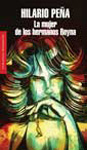
My rating: 4 1/2 stars
As I read Hilario Peña’s delightful novel, I felt as if I were solving one of those big, beautiful jig saw puzzles I used to solve with father on summer vacations. Covering a 40-year time span, it’s gradually revealed to be the saga of a loosely-knit family’s move from a dying town in Sinaloa to a position of power in the thriving city of Tijuana.
A story that shows what can be accomplished with ambition, brains and a faulty moral compass, the themes are constant reinvention, constant betrayal, and the importance of family – even wildly dysfunctional family. There’s lots of action. The book features a murder mystery, a gang war, police and political corruption, drug trafficking, the use of religion and sex as tools for personal and financial gain, and an allegorical escape of wild animals from the zoo.
There’s a huge cast of vividly-written characters, but the story revolves around three principal players. Roberto Reyna is a scheming womanizer with a surprising weakness. He has a distant, but strong tie to his half-brother, Nicolás, a seeming innocent who nevertheless has no problem capitalizing on the outrageous situations that present themselves. Most interesting of all is the mysterious Lorena “La Morena.” While she struggles for control over her own life, there’s no doubt that she has control over everyone she comes into contact with. Every time I thought we were finished with a character, he would come back to fill in another piece of the puzzle.
There were a large number of pieces in this puzzle, but I trusted the author to pull them all together, which he did, providing a truly satisfying and engaging reading experience.
__________________________________________________________________________________
The author’s description of his book, and the thought process that went into its creation:
La mujer de los hermanos Reyna narra las vivencias de un grupo de estafadores de poca monta entre los que se encuentran un comisario holgazán, su medio hermano y una despampanante mujer fatal apodada la Morena, quienes, con sus actos, llevarán a la ruina a un pueblo sinaloense llamado Estación Naranjo, antes de huir hacia la ciudad de Tijuana, donde cada uno se reinventará a sí mismo, superando su condición de desheredados por medio de complejas estafas, la única manera de subsistir en el mundo en el que viven, donde nada se les dio gratis.
Con esta obra me propuse crear un nuevo género al que llamo Melodrama Policiaco, el cual se encuentra influenciado en partes iguales tanto por la novela negra norteamericana como por algunos culebrones del canal de las estrellas; estos melodramas épicos que en ocasiones llegan a abordar la vida de todo un pueblo y que regularmente terminan con la villana quemada, rapada, desfigurada y metida en un manicomio.
Se me ocurrió la idea de un don Juan sinaloense, con hijos regados por todo el estado. Me pregunté, ¿cómo sería la relación entre estos medios hermanos, separados no solo por kilómetros de distancia entre sí, sino también por rencores, celos y envidias? Enseguida coloqué a una mujer de carácter fuerte y actos sumamente sensuales en medio de ellos, agregué un poco de melodrama a la mezcla, lo metí todo dentro de una trama de género policiaco, y de pronto ya tenía el concepto bien cuajado. Ahora solo hacía falta escribirlo.
El tema de don Juan me llevó a otro que es común denominador de todas mis historias: el tema rulfiano de la búsqueda del padre (de manera descarada el inicio de esta novela parafrasea el inicio de Pedro Páramo). Al menos es lo que persiguen los protagonistas de mis últimos tres libros, una figura paterna que les enseñe a convertirse en hombres para dejar de cometer los errores y tropiezos que terminarán provocando en unos casos la risa y en otros la lástima de parte de los lectores.
A cada personaje lo mueve una motivación diferente, como es el caso de la Morena, quien es guiada por su irreprimible deseo de libertad que más tarde se transforma en ambición de poder. Al comisario Nicolás Reyna lo mueve su deseo por reencontrarse con su padre, mientras que todo lo que Roberto Reyna desea, a pesar de su inicial pose de macho mexicano, es retornar al útero materno, a aquel origen apacible e idílico que terminó abruptamente con el suicidio de su madre. Al secuaz de este trío, el maquiavélico Rigoberto Zamudio, lo mueve su vampírica obsesión por poseer a la Morena, a quien ve como la fuente de la eterna juventud.
Existe una nostalgia que impregna todo el libro, con personajes que miran siempre hacia su pasado con añoranza. Evelina Zamudio y la nostalgia por las tradiciones de su pueblo, la mayoría de ellas abolidas por los caprichos de un pastor evangélico; el subprocurador César Mayorga y su nostalgia por un sistema político tan autoritario como funcional. Margarita Lizárraga, la figura materna sobre la que se abalanza Roberto Reyna para dejar atrás su vida de pendencias. También están otros personajes, como Raquel Torres, esta empleada de una joyería a punto de ser asaltada, quien padece del complejo de Electra hasta que conoce a Leonardo Zamudio, alias el DiCaprio, uno de los asaltantes a los que se habrá de enfrentar en el clímax de la historia.
El humor es otro ingrediente importante en La mujer de los hermanos Reyna, sin embargo procuré que éste funcionara como parte del hilo conductor más que como fin en sí mismo. Una herramienta de la cual me valgo para que el lector siga conmigo y escuche el mensaje que lanza una vida como la de Lorena Guzmán. Un mensaje difícil de desentrañar, incluso para el autor, pero que definitivamente se encuentra ahí, hablándonos en todo momento.
Mi novela predilecta de cuantas he publicado. La considero la mejor.La recomiendo ampliamente.





 Bruce Critchley's Mexico Here and There