

Some wonderful photos of Day of the Dead on this website, with a nice overview of what it’s about:
http://www.buzzfeed.com/adriancarrasquillo/35-breathtaking-dia-de-los-muertos-photos?bffb

Some wonderful photos of Day of the Dead on this website, with a nice overview of what it’s about:
http://www.buzzfeed.com/adriancarrasquillo/35-breathtaking-dia-de-los-muertos-photos?bffb

The wonderful website Mexico Desconocido asked its readers to submit their best photos of Día de los Muertos. Here they are:


I spotted this East LA seafood restaurant on a Sunday afternoon a couple of months ago. The reason I noticed it was the large number of customers, but that was the very reason that kept me from trying it that day. They were just too busy. I was in the neighborhood today, and had much better luck.
The menu has photos of the food, and my mind was made up the moment I saw the 5 Tacos de Camarón con Ensalada. It turned out to be 5 huge tacos buried under slices of avocado and a sour cream cole slaw. The tacos were filled with grilled shrimp that seemed to be lightly breaded, and a dash of pico de gallo, fried until they were crispy. I rarely encounter a crunchy taco, but the robust combination of seafood flavor, textures and even the warm and cool temperatures delivered on the promise I had seen in the photo.
I spoke with the owner, El Jato himself, a friendly, outgoing native of San Juan de los Lagos, Jalisco, near Guadalajara. He told me that he created most of the dishes on the menu, and all of the plates I saw whizzing past me looked delicious. I saw beautiful tilapia fried whole, gigantic fish tacos, and big seafood-cocktailish looking dishes called chavelas.
So there are at least three more visits in my future, before I go for a repeat on the shrimp tacos.
Here’s the address: 2936 E. 4th Street, Los Angeles, CA 90033
Phone: (323) 264-6590
A beautiful unplugged song by Mexico City band Hello Seahorse.

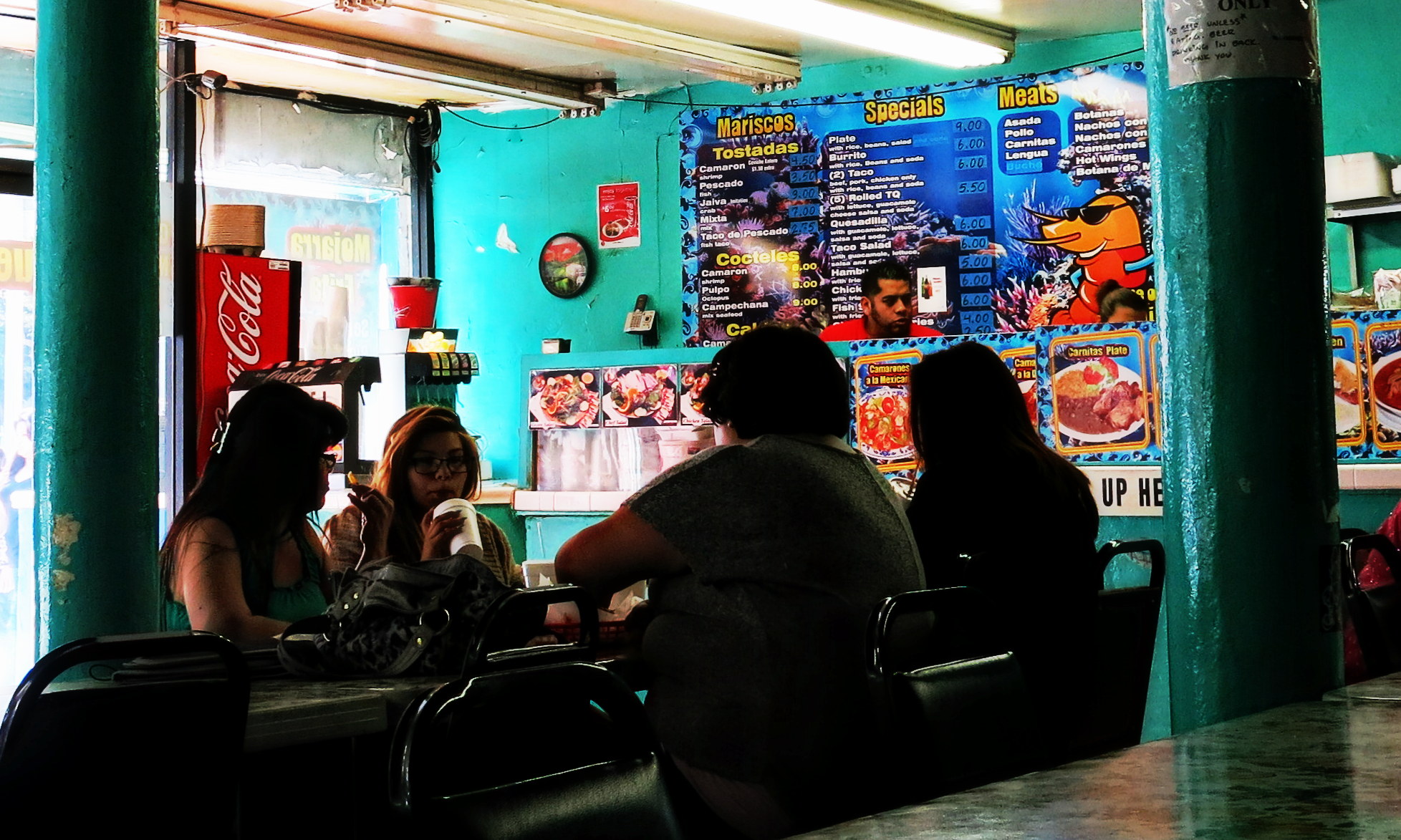

I’ve been curious for a long time about the restaurant next door to the Grand Central Market in downtown Los Angeles. In a previous post, I featured a wonderful octopus cocktail I had there, but never figured out the name of the place.
The sign outside says “Home of the Original Shrimp Place since 1929,” but it actually seems to be a food court with 2 food stands and a bar in back… I guess I’m satisfied with that as a reason to have no name.
Meanwhile, I had a delicious shrimp tostada, and couldn’t resist a repeat of the octopus cocktail. Name or no name, it’s on my list of fun, tasty places.
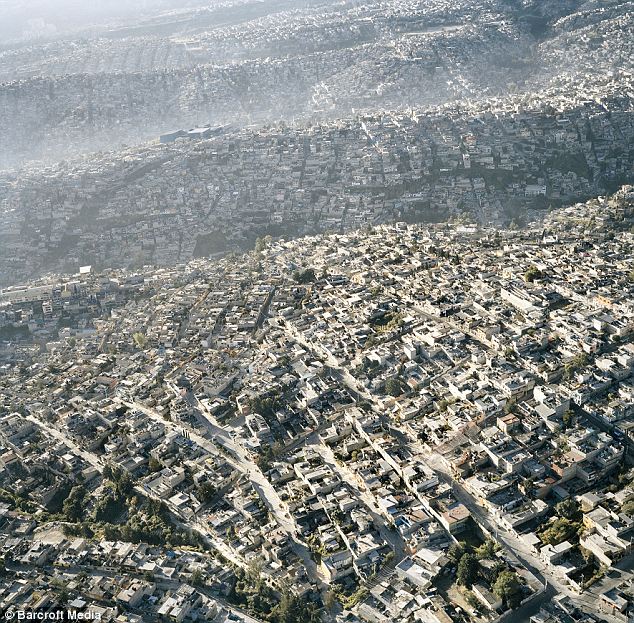
Photos by Pablo Lopez Luz for the Daily Mail, showing the remarkable population density of the huge city.
Here’s the link to the piece in Noiselab: http://noiselab.com/blog/otros/fotos-aereas-de-la-ciudad-de-mexico/

The teachers have been staging massive labor demonstrations in Mexico City. This photo particularly impressed me. Here’s the article in El Universal.

My rating: 4 1/2 stars
La Pirámide is the only successful hotel in a resort area that failed disastrously when all the others gave up fighting the engineering catastrophe that required constant import of sand from Cuba to replace the entire beach that washed away on a weekly basis.
The key to the resort’s unique success is “extreme tourism” in which visitors can engage in daredevil sports activities, but can also find themselves kidnapped and beaten by guerillas, or risk encounters with deadly snakes. The genius behind the concept is Mario Muller, but he has to be careful, because the hotel could easily be worth more to the owners as a money-laundering vehicle.
When Mario reaches out to his lifelong friend, ex-rocker Tony Góngora, and brings him to this fantasy land, Tony thinks he has found a safe refuge from reality, much safer than the drugged half-life he had been living for many years. Tony is holding on in the midst of the ruins of his life, much as the hotel is holding on in the midst of the ruined resort area. Even in this unreal environment, he still remains isolated, refusing to become involved, until an act of violence strikes rather close to home. And it turns out Mario has a much grander plan to up the ante, and force Tony into the bright glare of reality and personal engagement.
This is literary writing at its finest, as we have come to expect from Juan Villoro. It is a difficult task to make a story of a failed life in a failing environment interesting, even if the possibility of redemption lies at the end, but Villoro is more than capable of pulling it off. I first discovered him when a reviewer called his novel El Testigo “the great Mexican novel.” I’ve read many Mexican novels since then, and I know I’m not alone in placing Villoro at the very top of his profession.
______________________________________________________________________________________________
Hubo un tiempo en que las playas eran un sitio de descanso. En la época del turismo extremo los viajeros necesitan otras emociones. El ex rockero Mario Müller descubre una visionaria posibilidad en el Caribe: los placeres del miedo. Y a orillas de un inmenso arrecife de coral edifica La Pirámide, resort que ofrece peligros controlados hasta que un buzo muere fuera del agua. Reflexión sobre los daños que elegimos para intensificar la vida, esta apasionante novela describe una nueva ecología: el cambio climático vacía los hoteles y el lavado de dinero los regenera como emporios fantasma. Pero Arrecife también es una historia de amistad, amor y redención. Villoro, uno de los mejores escritores latinoamericanos, otorga realidad a una utopía: los problemas de ese paraíso son las virtudes de una novela excepcional.
«Esas atmósferas ominosas que tanto nos recuerdan por momentos a las ficciones apocalípticas o fantasmagóricas de Ballard. Los diálogos tienen esa sequedad irónica de las mejores respuestas y observaciones psicológicas de un Chandler. Arrecife es una novela perfecta a la hora de sincronizar el desdén por la vida que se inflige el narrador y el esfuerzo casi titánico, agónico, de un moribundo Mario, el amigo capital, por indicarle la ruta de su salvación definitiva. En esta magnífica novela de Juan Villoro no hay tiempos muertos» (J. Ernesto Ayala-Dip, El País).
«Lúcida y poderosa lectura del pasado y presente, donde el terror, el sacrificio de los dioses y el mito se confunden» (J.A. Masoliver Ródenas, La Vanguardia).
«La prueba irrefutable de que uno está ante un escritor de fuste reside en esa envidiable capacidad para cambiar de temas y registros cuando todo parecía dirigido a volver sobre lo mismo» (Ricardo Baixeras, El Periódico).
«Villoro se ha basado, para su libro, en ese fenómeno sadomasoquista de nuestra civilización que lleva a ciertos turistas del mundo desarrollado a disfrutar de un fin de semana en un campo de concentración o en una mazmorra de la Inquisición. Lo que él ha hecho es darle a su ficción unos tintes étnico-mítico-telúricos que la hacen totalmente verosímil… Una magnífica novela» (Iñaki Ezquerra, El Correo Español).

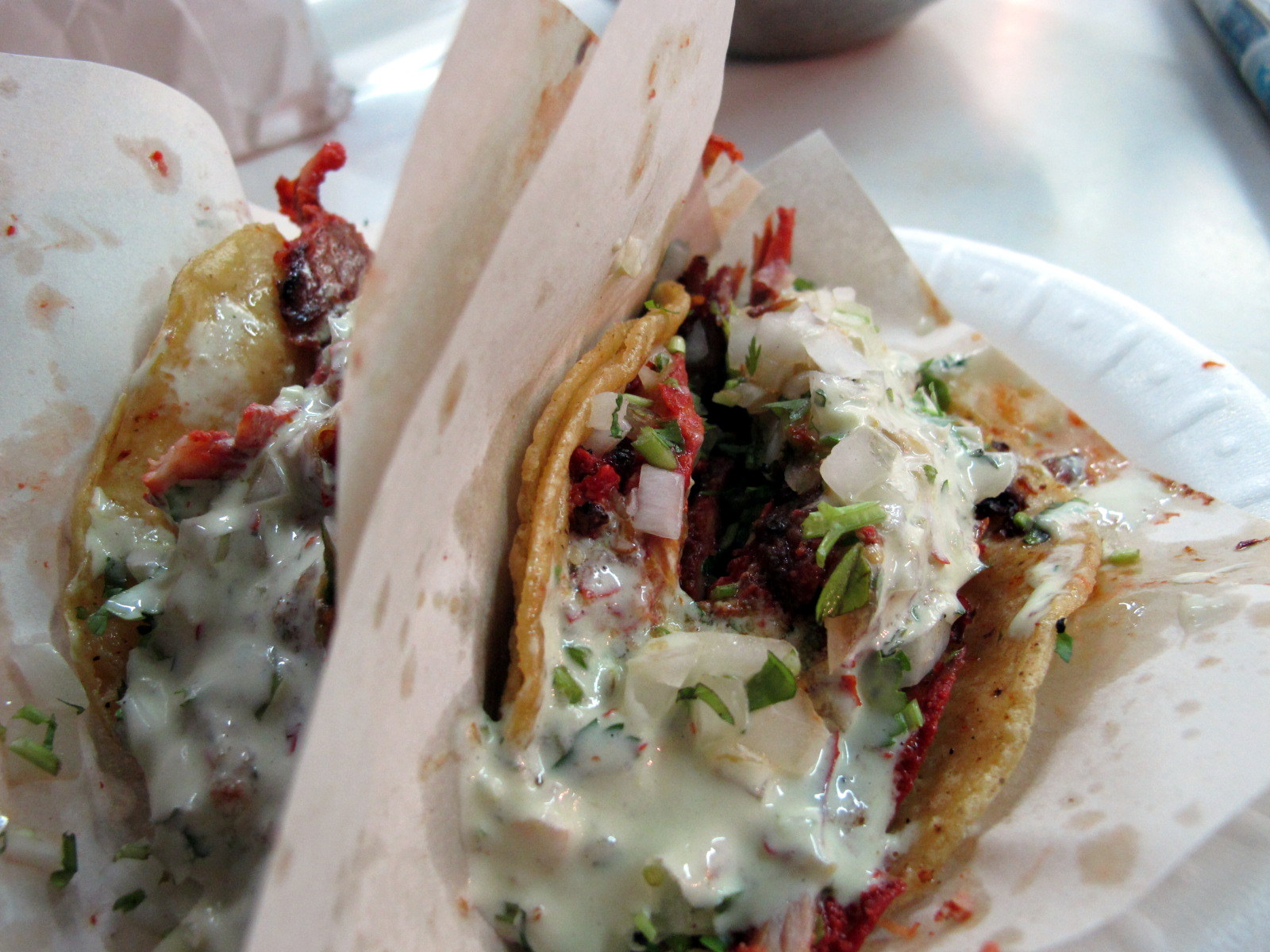
The LA Weekly magazine tells me it’s National Taco Day, and they list their 20 favorite tacos in Los Angeles. I’ve only had 7 of them – many of the establishments are trucks – but from what I can tell, these guys really know their tacos. Meanwhile, here are a few recent favorites of mine… unfortunately not in Los Angeles.
Here’s the LA Weekly link: http://blogs.laweekly.com/squidink/2013/10/tacos_los_angeles.php

When I saw the title of the song, I was concerned it was going to be an update of the cheesy, hugely popular song from the 1960s (that I secretly like) but it turned out to be a lovely song by the Mexican indie singer/songwriter Carla Morrison.
 Bruce Critchley's Mexico Here and There