
Duck enchiladas in a stunning black Oaxacan mole. At the lovely Polanco restaurant Ixote. Lunch cost more than my hotel that night, but a) I was staying at an inexpensive hotel, and b) it would have been worth it at any price.

Duck enchiladas in a stunning black Oaxacan mole. At the lovely Polanco restaurant Ixote. Lunch cost more than my hotel that night, but a) I was staying at an inexpensive hotel, and b) it would have been worth it at any price.
Cool video of a great song by Mexican-American hip-hop band Akwid. The combination of traditional norteño instrumentation and vocal style with the hip-hop beat is smart and unique. Sorry about the ad at the beginning, but I promise it’s worth it.
Here’s a TV production of a couple of songs by old-school singer/actress Laura Léon. The music may not be terribly trendy, and the production is a bit overcharged, but I do like her big, husky voice.
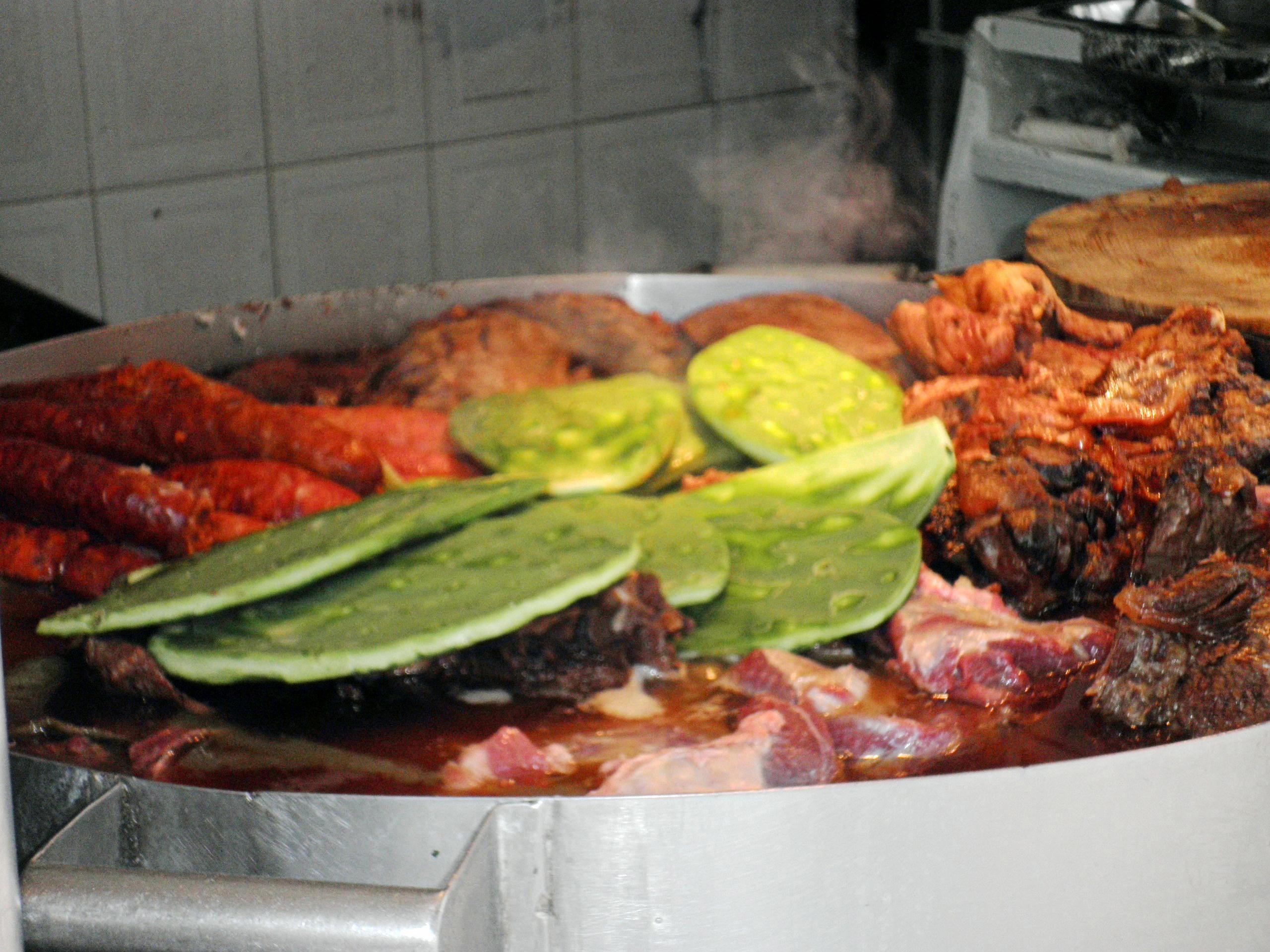
I never quite had the courage to try the tacos at this wonderful stand on Av. Buenos Aires. I think I recognize chorizo, tripas and nopales, but there are all sorts of other goodies cooking away in this gigantic pan… I suspect the reason I didn’t try it is that it is just down the street from my favorite place for Tacos al Pastor. I’ll tell you about that in a later post.
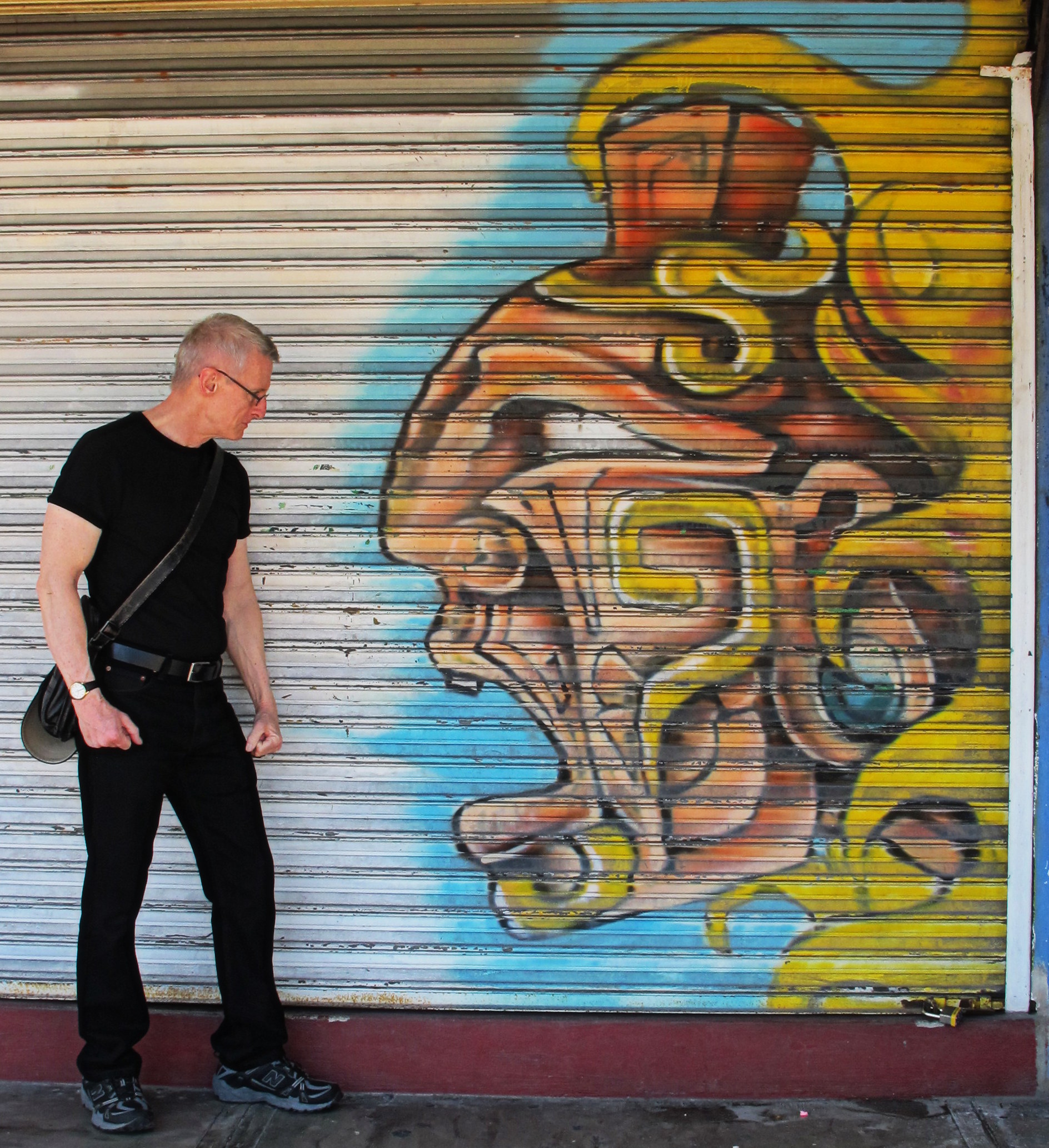
Downtown Cancún. February, 2012

Ok, I’ll admit that I didn’t know what salpicon was. Here’s what Wikipedia says: Salpicon and salpicón are terms used in French cuisine, Mexican cuisine, Central American cuisine and Colombian cuisine for preparations of one or more ingredients diced or minced and bound with a sauce or liquid. In Mexican cuisine and Central American cuisine, the term refers to a salad mixture containing thinly sliced or chopped flank steak, onion, oregano, chile serrano, avocado, tomatoes, and vinegar. The mixture is commonly served on tostadas, tacos or as a filling of Poblano peppers.
Tinga calls itself an Artisan taquería, but I was in the mood for a torta. Nobody does big, messy sandwiches like the Mexicans.
The salpicon torta at Tinga on La Brea Avenue was shredded braised beef on a beautiful, firm roll, topped with black and refried beans, guacamole, pico de gallo, lettuce and queso fresco, held together by a zesty and vinegary “salsa salpicon.” Perhaps a bit expensive at $12.25, but it was generously large, and absolutely delicious. A watermelon and lemonade agua fresca was a perfect accompaniment.
Here’s the website: http://www.tingabuena.com/homepage.php
A great song by Gloria Trevi, the ultimate rebellious teenage girl. She was the highest paid Spanish language woman singer in the 1990s, passing singers like Gloria Estefan by a wide margin. She had some tragedies, including sending time in Brazilian and Mexican prisons, but here career has been going strong again for the past 10 years or so.
Her songs often start quietly, then build to a climax that threatens to collapse the roof. This is by far the greatest vocal performance I’ll ever post here.

I try to get to Barrio Café whenever I’m in Phoenix. The Torta de Filetito is a super tasty and satisfying meal. A lovely piece of filet mignon with warm roquefort cheese, longaniza chorizo sausage and grilled onion finished with a tangy chipotle red wine reduction.

My rating: 4 1/2 stars
Alejandro Almazán’s fiction can be cynical and disturbing. His recent novel El Más Buscado (see my earlier review) paints a troubling portrait not only of an elite leader in the drug industry, but also of the Mexico that has allowed him to exist and flourish. Chicas Kaláshnikov y Otras Crónicas, however, is disturbing at an entirely different level, because it’s not fiction. It is a series of interviews with the very real people who populate the Mexican drug trade, stripping away the cliches, horrors and romanticism that have filled our imaginations for many years.
A collection of stories published by Almazán in various publications between 2001 and 2012, the book introduces us to Yaretzi, a young woman now sitting in a Chihuahua jail, who wielded her AK47 cuerno de chivo (the Mexicans call them “goats’ horns”) as a surprisingly underpaid cartel assassin. She doesn’t look at her victims for fear of going crazy. We also meet Jota Erre (J.R.), who has been lured into various low-level jobs for the cartels, ranging from marijuana harvester to debt collector / assassin. At every turn, however, he comes away without getting paid, and what recourse does he have? None… if he wants to stay alive. At another end of the spectrum, we meet Julián Leyzaola Pérez, the one-time chief of police in Tijuana, and celebrated “incorruptible cop.” In a remarkable series of interviews, Almazán records the opinions, insights, and even introspections of a controversial figure widely held to be a hero.
These and other characters are presented so vividly, but without embellishment, that the “war on drugs” now has a face. The face of the real people involved in it.
Reseña de Rodrigo Araiza en EstiloDF:
Más allá de las tramas y personajes retratados en este compendio de historias, Chicas Kaláshnikov y otras crónicas ofrece un panorama de un problema que aqueja a la sociedad mexicana: el narcotráfico.
La mal llamada “guerra contra el narco” pasó de ser una gripa bajo control a un cáncer invasivo capaz de destruir el tejido social desde su célula más básica: la familia. En su ejercicio periodístico, Alejandro Almazán ha escudriñado dentro de las historias del narcotráfico, y como resultado de esa búsqueda se encontró con un país hundido en la pobreza, desigualdad, injusticia, corrupción y prepotencia, ingredientes básicos para un estado fallido.
A través de personajes como Lino Portillo Cabanillas, El Jota Erre; el adolescente sicario conocido como El Ponchis, e incluso figuras de autoridad como Julián Leyzaola Pérez y el alcalde Mauricio Fernández, el autor de estas crónicas reseña y dibuja un México herido por la violencia.
“Te encuentras con que los personajes también son seres humanos, tienen familia y ellos ven el narcotráfico como un trabajo; esto no quiere decir que sus actos son justificables, sin embargo, los medios se han encargado de crear un estereotipo que no se apega a la realidad del narco”, señala Almazán.Chicas Kaláshnikov y otras crónicas compila una serie de historias publicadas por Almazán en distintos medios de comunicación durante un periodo de 11 años, entre 2001 y 2012. Son historias que no pierden vigencia, personajes que ahora son cotidianos, que aunque parecieran sacados de la ficción, son parte de la realidad.
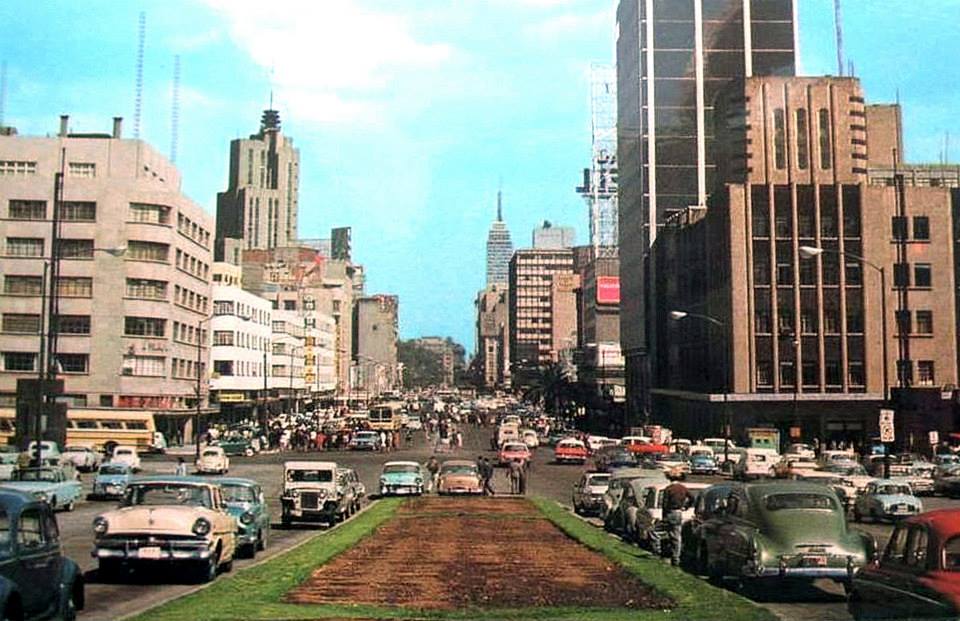
A great picture of Mexico City in the 1960s, from the Facebook page “La ciudad de México en el tiempo”
Imagen tomada en la Plaza de la República desde el camellón central que dividía los dos carriles abiertos al tránsito vehicular que pasaba justo frente al Monumento a la Revolución, en lo que hoy es parte de la explanada. Al fondo se aprecian, entre otros inmuebles, el edificio de la Lotería Nacional con su antena en espiral y la Torre Latinoamericana. Años sesenta.
Crédito imagen: Col. Familia Guerrero. ¡Gracias!
En Google Maps: http://goo.gl/maps/JCXhT
 Bruce Critchley's Mexico Here and There