Corn and Green Chile Tamales – A Recipe

tamales

Tamales have been around for some 10,000 years. The Mayas and Aztecs ate tamales, as did the civilizations that came before them. Here’s a recipe that’s easy to follow, and certain to be delicious:

Flavorful tamales stuffed with sweet corn, cheese and tangy green chile sauce.
Yield: 30-40 tamales

Ingredients:

16 oz corn kernels
3 oz. can diced green chiles
4 oz cream cheese (1/2 a standard package)
1/2 cup sour cream or crema
16 oz queso fresco or jack cheese (shredded or crumbled)
1 teaspoon cumin
1 teaspoon chile powder
1 teaspoon salt
1/2 teaspoon salt
40 Corn Husks
Tamale Dough (Recipe Below)
Preparation:

Prepare the filling
Add the corn and the diced chiles to a large bowl and add in the cream cheese, queso fresco, cumin, chile powder, and 1/2 teaspoon of salt. Use a large spoon to smash the cream cheese into the mixture to begin mixing it. I like to just use my hands to squish it all together. Once the filling is made, set it aside. (Note: You can make the filling the day before and store it in the refrigerator until you are ready to use it.)
Preparing the Corn Husks
Go through the corn husks removing any debris. Separate the larger usable pieces from the smaller bits and pieces. Save the smaller pieces for later. Go through the corn husks removing any debris. Separate the larger usable pieces from the smaller bits and pieces. Save the smaller pieces for later. Place the husks into a large bowl. Cover husks with warm water. Set a heavy item (like a heavy bowl or mug) on top of the husks to keep them submerged. Remove the husks from the water and pat dry. Place into a covered dish or a large plastic bag to prevent from drying out. Use only the larger and medium sized husks for the tamales. The smaller ones can be used later for ties or patches. When looking at the husk, notice the shape. They have a narrow end, a broad end, and two long sides.

Masa Harina Tamale Dough
6 cups masa harina
5 cups warm water or low-sodium chicken broth
2 cups lard
3 tablespoon onion powder
2 tablespoon cumin
3 tablespoon chile powder
2 teaspoons salt

In a mixing bowl combine masa and warm water or broth until combined. Let the mixture sit for 20 minutes or so to let the masa soften. Then mix it on low speed until a dough forms. After the Masa Harina is prepared, gradually add in the salt, cumin and onion powder by sprinkling them over the dough as you mix it. In a separate bowl, whip lard or shortening about three minutes or until fluffy. Add the lard to the dough a little at a time while mixing until well combined. The mixture should be about the consistency of peanut butter. If not, add more masa harina, water or broth as necessary.
Assembling the Tamales
Lay a husk on a flat surface. Spoon 1-2 tablespoons of dough onto the husk, depending on the size of the husk. Use the back of a metal spoon to spread the dough onto the husk. When spreading the dough, leave a space of about 4 inches from the narrow end of the husk and about 2 inches from the other end. Spread the dough to the edge of one of the long sides and 2 inches away from the other long side. Try to keep the dough approximately 1/4 inch thick. Spread a couple of spoonfuls of filling down the center of the dough, leaving at least one inch of dough around the sides. Locate the long side with a 2 inch space with no masa. Fold that over, slightly overlapping the other side so the edges of the dough meet. Wrap the extra husk around the back. Then fold the broad end over the top and then the longer narrow end over the broad end. Create strips of husk by cutting or tearing 1/4 inch lengths off of some of the smaller or unusable husks. Use these to tie across the middle of the tamale to hold the flaps down. Set tamales upright in a steamer. You can buy large steamers made just for this purpose. You may have something else you can use to create the same effect. The key is to have a small amount of boiling water on the bottom of the pot and a colander or mesh of some sort to keep the tamales away from the water. Steam for about 90 minutes and let them cool before serving.

Making Tamales is easy once you get the hang of it. It may take you a little longer to make the first few, but after you learn the ropes, you’ll have a whole batch ready in no time.

Here’s the website: http://mexicanfood.about.com/od/tamales101/r/Corn-And-Green-Chile-Tamales.htm
Los Tucanes de Tijuana – El Tucanazo

A lively song by Los Tucanes de Tijuana, probably the most popular Norteño band in Mexico. Hugely successful, they can fill stadiums on either side of the border. There has been some controversy over the years, though, over whether they have had ties to major figures in the drug trade.

Lotería Grill – Santa Monica – Carnitas en Salsa Morita

IMG_7174-001

I was disappointed some time ago when the Gaucho Grill closed on the Santa Monica Promenade, but I instantly forgave them when it was replaced by Lotería Grill. I used to go to their original location when I lived near the Farmers Market on Third Street, but this is a much more inviting restaurant, and the food is every bit a good as it always was.

A long-time favorite has been the carnitas burrito with salsa morita, but this was the first time I had the entire “platillo.” Morita chiles are smoked, red-ripe jalapeño peppers, like chipotle peppers, except they are smoked for a shorter time. Interestingly, Lotería’s salsa packs more of a punch than I would have expected from a jalapeño. The rich, almost fruity flavor goes beautifully with the perfectly cooked pork, and the sides of rice and black beans provide a nice balance.

Here’s the website: http://loteriagrill.com/about-us

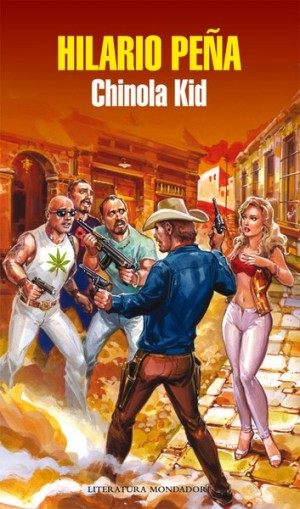
Hilario Peña – Interview on his novel, Chinola Kid

CHINOLA-KID-120-300x509

Popular Tijuana novelist Hilario Peña is known for his noir books. He calls himself “un escritor chandlereano,” which doesn’t need translation to refer to Raymond Chandler. I really enjoyed Malasuerte en Tijuna – see my earlier review. For his fifth novel, Hilario has chosen to do a straight-up western. He talks about how counter-intuitive it seemed at first to create a sincerely good lawman as the main character. It’s a good interview, published by bunker – see the link below.

Por Sergio Huidobro @sergiohuidobro

Tijuana makes me happy, cantan las bocinas. Y es cierto: Tijuana hace feliz a Hilario Peña (1979), porque es la ciudad que lo hizo escritor. “Sobrevivo en una de las ciudades más salvajes del mundo”, afirma; “pero mi tipo de arte no depende de ello. Es la ventaja que ofrece la literatura de género popular, que proporciona una distancia sana entre el artista y sus personajes, poniendo al héroe y su historia siempre en primer plano. Gracias a ello Phillip Marlowe, Sam Spade y el Quijote son más importantes que los hombres que los crearon y la circunstancia de cada uno.”

No hay asomo de condescendencia ni disculpa cuando Hilario Peña se refiere a sus cinco novelas como “literatura popular”; su universo está alimentado por novelas pulp, folletines, Raymond Chandler, el Libro Vaquero, James Cain y los westerns de John Ford en la misma medida. Y si en Malasuerte en Tijuana (2009) o en El infierno puede esperar (2010) estaban pobladas por el espíritu detectivesco de Chandler y Cain, respectivamente, Chinola Kid se aleja de los entornos noir para presentarse como un western en toda forma.

Su figura, hay que decirlo, es un héroe: Rodrigo Barajas, un outsider insólito y una suerte de Quijote contra-contra-cultural; ha llegado a un pueblo asolado por la violencia entre carteles a demostrar que la ley es el reino… a cualquier precio.
“Desde mi segunda novela” –Chinola es la quinta… “llegué a la conclusión de que había suficientes novelas de escritores que se expresan por medio de sus alter-egos: versiones ligeramente disfrazadas de ellos mismos. A partir de ahí empecé a crear novelas inscritas dentro del género policiaco y protagonizadas por antihéroes, sin embargo al poco tiempo esto también me pareció un recurso muy socorrido.”

Así llegó a Rodrigo Barajas, un persone eminentemente moral, tan atípico en la narrativa de nuestros días: “No soy muy amante del mentado hiperrealismo, ni del realismo cochinón, así que el siguiente reto fue superar el cinismo que como mexicano me embarga y concebir a un representante de la ley honesto y valiente, en claro contraste con la realidad. Es decir, crear un héroe a partir de sus virtudes, en lugar de hacerlo partiendo de sus debilidades, lo cual ya había hecho antes. Fue así como surgió el comisario Barajas, quien al inicio de mi libro aparece como un ente inhumano y, conforme avanza la historia, vamos conociendo sus vicios, pasiones y defectos.”

Las calles del Tecolote, donde transcurre la historia, podrían ser caminadas por el Gary Cooper de A la hora señalada o por el John Wayne de Liberty Valance. Pero Barajas cabalga a solas, montado en su Pick-Up, canturreando viejos temas de Joan Sebastian o Los cadetes de Linares. Es un héroe, si, pero es el único héroe posible en un tiempo donde las cabezas ruedan y los cuerpos cuelgan de los puentes.
A Hilario Peña no le ocupa ni preocupa la actual explosión de etiquetas mercantiles como “literatura posnorteña”, “narco-novela” o similares: “Porque respeto y admiro mucho a los que aceptan el desafío de expresarse por medio de un género tan denostado y, al mismo tiempo, tan difícil de ejecutar como el de los vaqueros y comisarios, me gusta decir que me identifico con autores como Antonio Vera Ramírez (nombre real del prolífico español Lou Carrigan) y Francisco González Ledesma, a quienes dediqué Chinola Kid, pero sé que me falta mucho para adquirir su habilidad. No creo que ninguno de ellos sea capaz de tomarse tan en serio como para inventarse una etiqueta generacional para luego colocársela a sus propios libros.”

En Búnker nos encanta Hilario Peña, y nos encanta Chinola Kid. Incluso si eres alérgico a las novelas del narco, incluso si nunca viste un western, ésta es una recomendación asegurada.

http://www.bunkerblog.com.mx/bunkerblog.php?ID=1766

Blue Corn Quesadilla – Mercado Olympic – Downtown Los Angeles

IMG_8166-001

IMG_8160-001

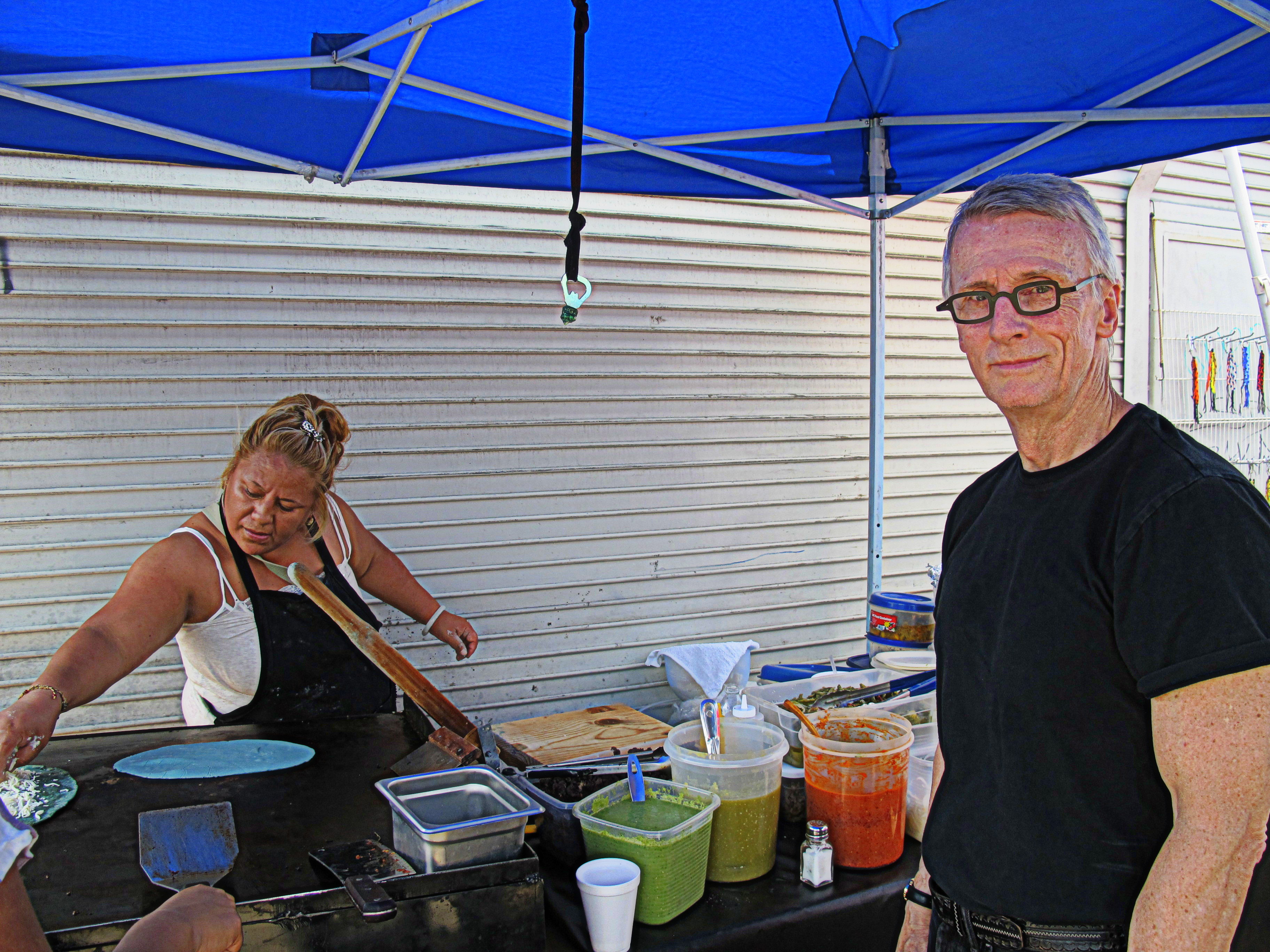
Olympic Boulevard becomes a thriving marketplace on Saturdays and Sundays. All sorts of things are on sale, from dried chiles to piñatas, but the food stands are what attracted me this weekend.

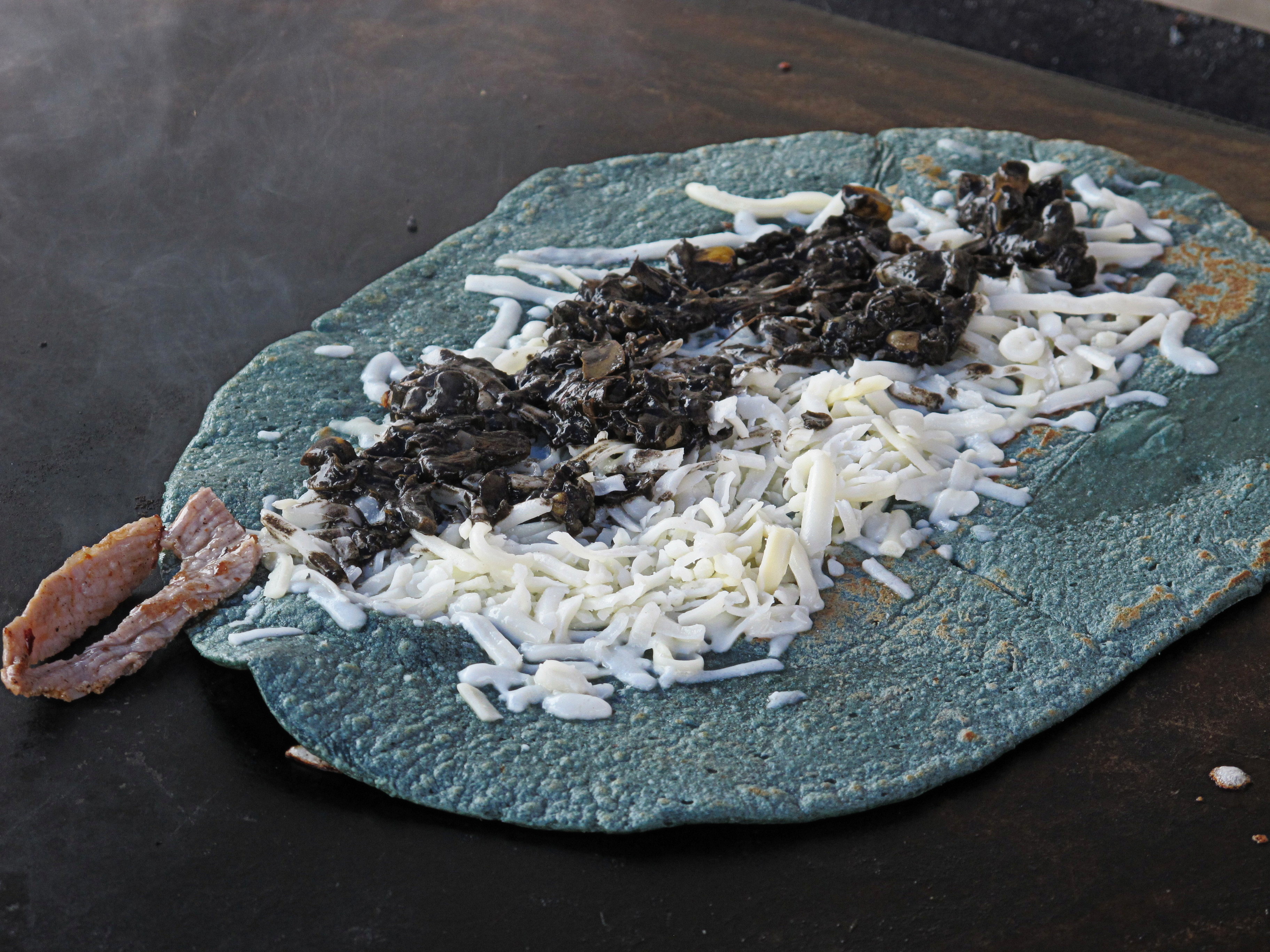
I’ve seen blue corn tortillas and quesadillas in Mexico, but never had the chance to try them, so this was my opportunity. This was a family-run operation, with mom doing the cooking, and the kids keeping the operation running smoothly.The choices were rather exotic, including pig’s blood and squash flowers, but I was a little more conservative, ordering my quesadilla with shredded cheese, cecina (paper-thin slices of marinated beef) and huitlacoche, the highly-prized corn fungus delicacy. Mom made the tortilla from blue masa and tossed it right onto the grill, and when it was done, it was hot enough to hurt my fingers. The depth of flavor of the heavy blue tortilla was remarkable, the toasted corn flavor balancing the fruity corn fungus flavor of the huitlacoche. A dash of red salsa and a grilled green onion made it a perfect meal.

Nance Ice Cream

IMG_8327-001

Nanches Fruit

Just a couple of weeks ago, I discovered nance fruit when my friend Leili became curious about the yellow berries that a woman was selling on Alvarado Street. I think I liked them more than Leili did. They were sweet and tasty, vaguely like a cross between a berry and a pear. Turns out they make a really nice ice cream.