Popocatéptl Frighteningly Active

970932_10151743413915681_1687760472_n

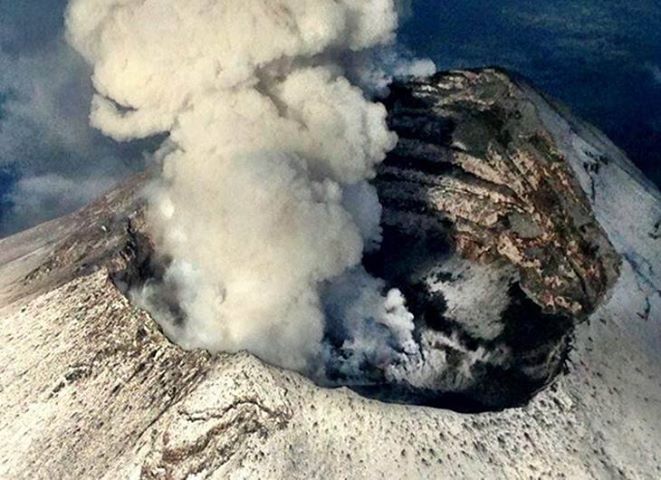
The famous volcano near Mexico City and Puebla has been increasingly active for several months, including throwing massive amounts of ash into the air. Mexico City airport – 40 kilometers away, was shut down briefly earlier this week because of ash. The alert level is just one step short of calling for evacuation. Here’s the link to El Universal newspaper.
http://www.eluniversal.com.mx/estados/2013/emitio-popocatepetl-39-exhalaciones-ultimas-24-horas-935175.html

Tinga – Los Angeles – Torta de Salpicon

IMG_8498-001

Ok, I’ll admit that I didn’t know what salpicon was. Here’s what Wikipedia says: Salpicon and salpicón are terms used in French cuisine, Mexican cuisine, Central American cuisine and Colombian cuisine for preparations of one or more ingredients diced or minced and bound with a sauce or liquid. In Mexican cuisine and Central American cuisine, the term refers to a salad mixture containing thinly sliced or chopped flank steak, onion, oregano, chile serrano, avocado, tomatoes, and vinegar. The mixture is commonly served on tostadas, tacos or as a filling of Poblano peppers.

Tinga calls itself an Artisan taquería, but I was in the mood for a torta. Nobody does big, messy sandwiches like the Mexicans.

The salpicon torta at Tinga on La Brea Avenue was shredded braised beef on a beautiful, firm roll, topped with black and refried beans, guacamole, pico de gallo, lettuce and queso fresco, held together by a zesty and vinegary “salsa salpicon.” Perhaps a bit expensive at $12.25, but it was generously large, and absolutely delicious. A watermelon and lemonade agua fresca was a perfect accompaniment.

Here’s the website: http://www.tingabuena.com/homepage.php

Chicas Kaláshnikov y Otras Crónicas – Alejandro Almazán

9786078303045

My rating: 4 1/2 stars

Alejandro Almazán’s fiction can be cynical and disturbing. His recent novel El Más Buscado (see my earlier review) paints a troubling portrait not only of an elite leader in the drug industry, but also of the Mexico that has allowed him to exist and flourish. Chicas Kaláshnikov y Otras Crónicas, however, is disturbing at an entirely different level, because it’s not fiction. It is a series of interviews with the very real people who populate the Mexican drug trade, stripping away the cliches, horrors and romanticism that have filled our imaginations for many years.

A collection of stories published by Almazán in various publications between 2001 and 2012, the book introduces us to Yaretzi, a young woman now sitting in a Chihuahua jail, who wielded her AK47 cuerno de chivo (the Mexicans call them “goats’ horns”) as a surprisingly underpaid cartel assassin. She doesn’t look at her victims for fear of going crazy. We also meet Jota Erre (J.R.), who has been lured into various low-level jobs for the cartels, ranging from marijuana harvester to debt collector / assassin. At every turn, however, he comes away without getting paid, and what recourse does he have? None… if he wants to stay alive. At another end of the spectrum, we meet Julián Leyzaola Pérez, the one-time chief of police in Tijuana, and celebrated “incorruptible cop.” In a remarkable series of interviews, Almazán records the opinions, insights, and even introspections of a controversial figure widely held to be a hero.

These and other characters are presented so vividly, but without embellishment, that the “war on drugs” now has a face. The face of the real people involved in it.

Reseña de Rodrigo Araiza en EstiloDF:

Más allá de las tramas y personajes retratados en este compendio de historias, Chicas Kaláshnikov y otras crónicas ofrece un panorama de un problema que aqueja a la sociedad mexicana: el narcotráfico.

La mal llamada “guerra contra el narco” pasó de ser una gripa bajo control a un cáncer invasivo capaz de destruir el tejido social desde su célula más básica: la familia. En su ejercicio periodístico, Alejandro Almazán ha escudriñado dentro de las historias del narcotráfico, y como resultado de esa búsqueda se encontró con un país hundido en la pobreza, desigualdad, injusticia, corrupción y prepotencia, ingredientes básicos para un estado fallido.

A través de personajes como Lino Portillo Cabanillas, El Jota Erre; el adolescente sicario conocido como El Ponchis, e incluso figuras de autoridad como Julián Leyzaola Pérez y el alcalde Mauricio Fernández, el autor de estas crónicas reseña y dibuja un México herido por la violencia.

“Te encuentras con que los personajes también son seres humanos, tienen familia y ellos ven el narcotráfico como un trabajo; esto no quiere decir que sus actos son justificables, sin embargo, los medios se han encargado de crear un estereotipo que no se apega a la realidad del narco”, señala Almazán.Chicas Kaláshnikov y otras crónicas compila una serie de historias publicadas por Almazán en distintos medios de comunicación durante un periodo de 11 años, entre 2001 y 2012. Son historias que no pierden vigencia, personajes que ahora son cotidianos, que aunque parecieran sacados de la ficción, son parte de la realidad.

Los Tucanes de Tijuana – El Tucanazo

http://www.youtube.com/watch?v=VNjI3JvDz7I

A lively song by Los Tucanes de Tijuana, probably the most popular Norteño band in Mexico. Hugely successful, they can fill stadiums on either side of the border. There has been some controversy over the years, though, over whether they have had ties to major figures in the drug trade.

Los Cuates de Sinaloa – La Reina del Sur

http://www.youtube.com/watch?v=BxUD4AJIr6M

The Spanish novelist Arturo Perez Reverte wrote the great Mexican novel La Reina del Sur. Hugely influenced by the novels of Sinaloan writer Elmer Mendoza, it tells the story of a how a young woman from Sinaloa came to dominate the drug trade in southern Europe, but is then drawn back to her native country for sentimental reasons. The book was a huge sensation, and was turned into a popular television series in Mexico.

Los Cuates de Sinaloa made their name by singing Corridos, or story songs. Many of their songs fall into the category of Narcocorridos, because they tell the stories of famous drug traffickers. In fact I first became aware of them from the narcocorrido they sang in the opening sequence of an episode of Breaking Bad… It seems fitting that they would sing the story of La Reina del Sur.

Origins of the Burrito

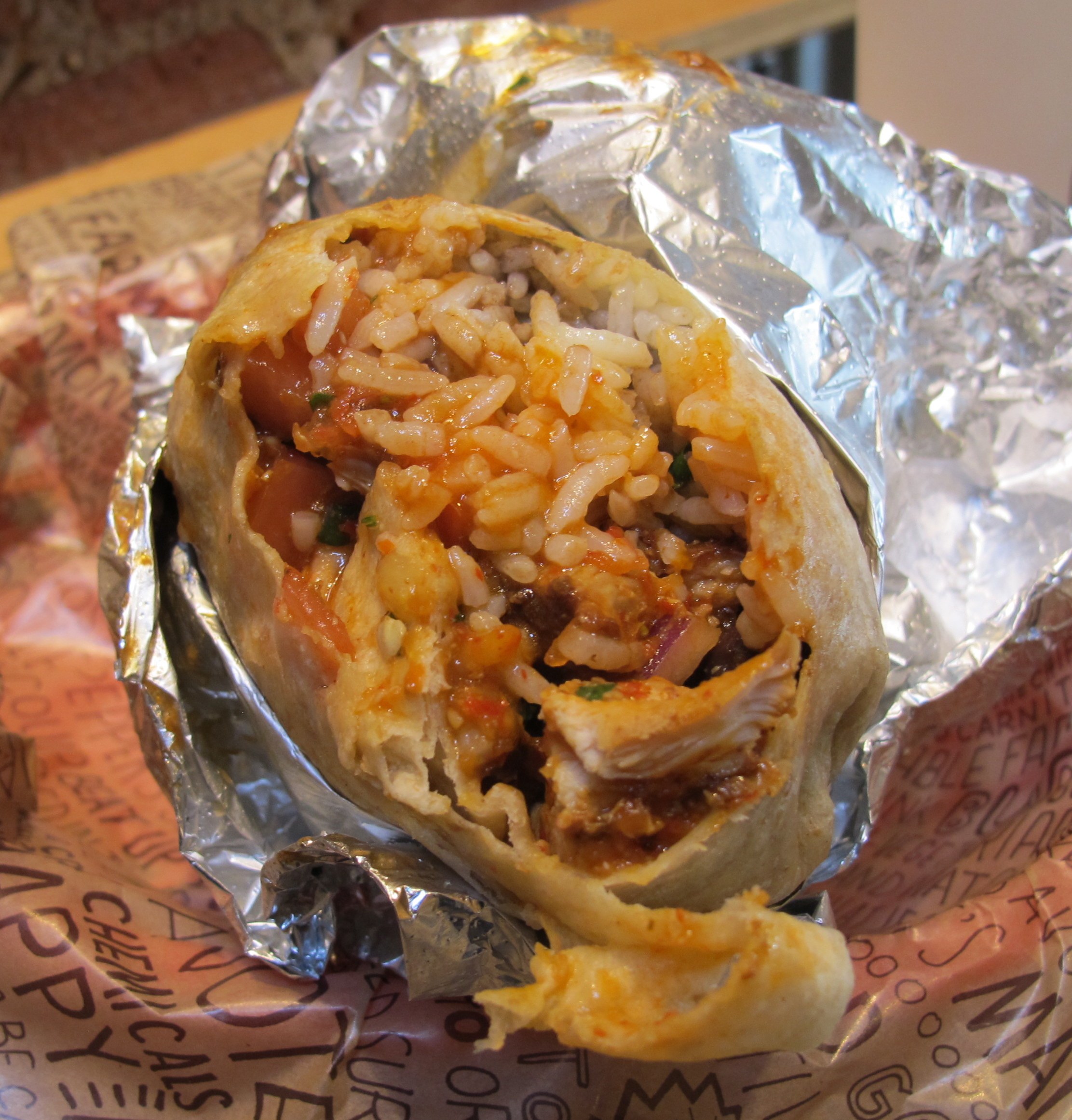
IMG_7578-001

Years ago, I heard an NPR report on some researchers who were tracing the history of the burrito. Because it has a flour tortilla wrapping, they reasoned, it must come from either Northern Mexico or the U.S. Their conclusion was that it originated somewhere near San Francisco in the 1930s.

About 3 years ago, I got into a discussion on Facebook with a Mexican friend on the same subject, and of course, there was no particular conclusion. The crazy coincidence was that I stepped away from the computer that evening and picked up a novel I was reading, and the main character went to the library to research the origins of the burrito.

Here’s what Wikipedia says:

Cuisine preceding the development of the modern taco, burrito, and enchilada was created by Mesoamerican peoples of Mexico, who used tortillas to wrap foods, with fillings of chili peppers, tomatoes, mushrooms, squash, and avocados. The Pueblo people of the Southwestern United States also made tortillas with beans and meat sauce fillings prepared much like the modern burrito we know today.

The precise origin of the modern burrito is not known. It may have originated with vaqueros in northern Mexico in the nineteenth century; farmworkers in the fields of California’s Central Valley, in Fresno and Stockton; or with northern Sonoran miners of the 19th century. In the 1895 Diccionario de Mexicanismos, the burrito was identified as a regional item from Guanajuato and defined as “Tortilla arrollada, con carne u otra cosa dentro, que en Yucatán llamancoçito, y en Cuernavaca y en Mexico, taco” (A rolled tortilla with meat or other ingredients inside, called ‘coçito’ in Yucatán and ‘taco’ in the city of Cuernavaca and in Mexico City).

An often-repeated folk history is that of a man named Juan Méndez who sold tacos in a street stand in the Bella Vista neighborhood of Ciudad Juárez, using a donkey as a transport for himself and the food, during the Mexican Revolution period (1910–1921). To keep the food warm, Méndez wrapped it in large homemade flour tortillas underneath a small tablecloth. As the “food of the burrito” (i.e., “food of the little donkey”) grew in popularity, “burrito” was eventually adopted as the name for these large tacos
Another creation story comes from 1940s Ciudad Juárez, where a street food vendor created the tortilla-wrapped food to sell to poor children at a state-run middle school. The vendor would call the children his burritos, as burro is a colloquial term for dunce or dullard. Eventually, the derogatory or endearing term for the children was transferred to the food they ate.

In 1923, Alejandro Borquez opened the Sonora cafe in Los Angeles, which later changed its name to the El Cholo Spanish Cafe. Burritos first appeared on American restaurant menus at the El Cholo Spanish Cafe during the 1930s.] Burritos were mentioned in the U.S. media for the first time in 1934,] appearing in the Mexican Cookbook, a collection of regional recipes from New Mexico authored by historian Erna Fergusson.

Chicken Enchiladas – Cincola, Westchester, Los Angeles

IMG_6845-001

I tease my friend Robert because he will only ever order chicken enchiladas in a Mexican restaurant. Some day I’ll fool him by taking him to a place that doesn’t serve enchiladas. Meanwhile, the enchiladas he ordered at Cincola ( or is it Cinco L.A.? ) were absolutely great! Nice moist pieces of chicken rolled in firm tortillas, and topped with a delicious green sauce, rich and complex, with an interesting slightly sour edge. An attractive minimalist bar with a suitably loud young crowd, this isn’t a place I would have expected to find a serious Mexican kitchen. I’ll tell you about the chicken in black mole later.

Here’s the website: http://cincola.com/

Bohemia Beer

BohemiaMexicanbeerrange[1]

I was in my early 20s when I first went to Acapulco. It was an exciting trip involving beautiful beaches, fun discos and exotic food. I even had a holiday romance. I had never been served beer with a wedge of lime, and I was thrilled with the magical flavor of Bohemia beer with a tiny dash of lime. I started to look for Bohemia after that, especially on my trips to Mexico, but was especially happy when I moved to California, where it is widely available everywhere. The crisp, hoppy flavor and many wonderful memories make Bohemia my favorite beer.