Huitlacoche – Aquí es Texcoco and Olympic Mercado

I wonder how many gringos had huitlacoche for both lunch and dinner yesterday? Well, I did.

Huitlacoche is a fungus that grows on the corn plant, and the unappetizing english translation is corn smut. It has a rich mushroomy, corny sort of flavor that gives a delicious earthy undertone to other foods, particularly tortillas and cheese, in my experience.

I’ve heard it called Mexican caviar, and although I had tried it a few times before, I really started to focus on it after reading the wonderful novel Policía de Ciudad Juárez by Miguel Ángel Chávez Díaz de León. His main character is fascinated amost to point of obsession with huitlacoche, and orders it wherever he can find it.

I had two entirely different experiences with huitlacoche yesterday.
P1060422-002

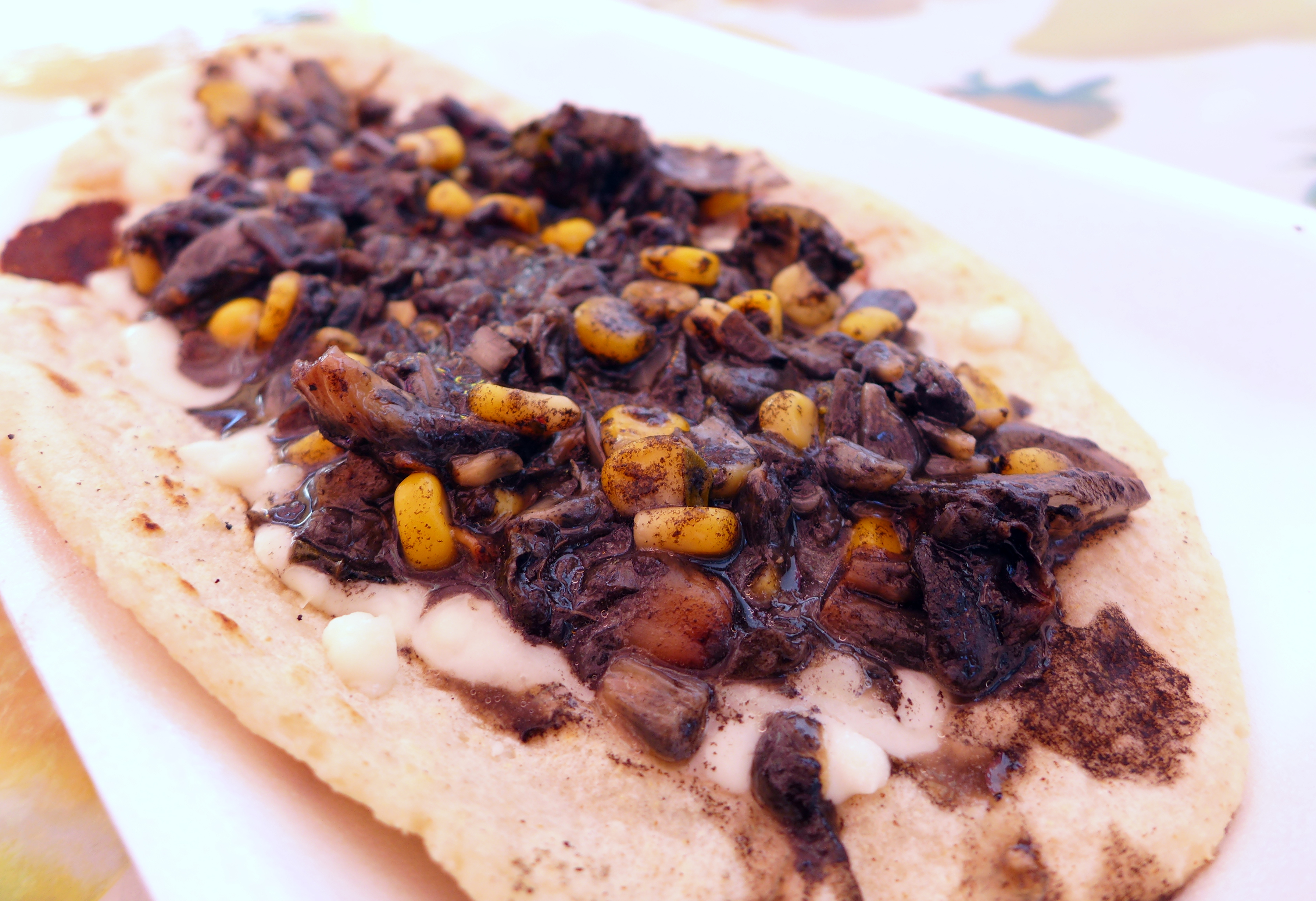
The first was at a food stand in the Olympic Mercado, where Los Angeles vendors set up shop on Saturdays. I had a huarache de huitlacoche. It is called a huarache because the masa is formed in the shape of a sandal, like a super-thick tortilla. (No, I haven’t yet figured out the difference between a huarache and a chancla, which translates a flip-flop sandal) The corn aspects of the huitlacoche flavor blended beautifully with the toasted corn flavor of the huarache, and they were balanced nicely by the melted cheese.
P1060624-001

In the evening, I drove out to Bell Gardens, near Commerce, to Aquí es Texcoco for their spectacular roast lamb. I’ll tell you about that in another post, but right now, you need to know about the “quesataco” de huitlacoche.

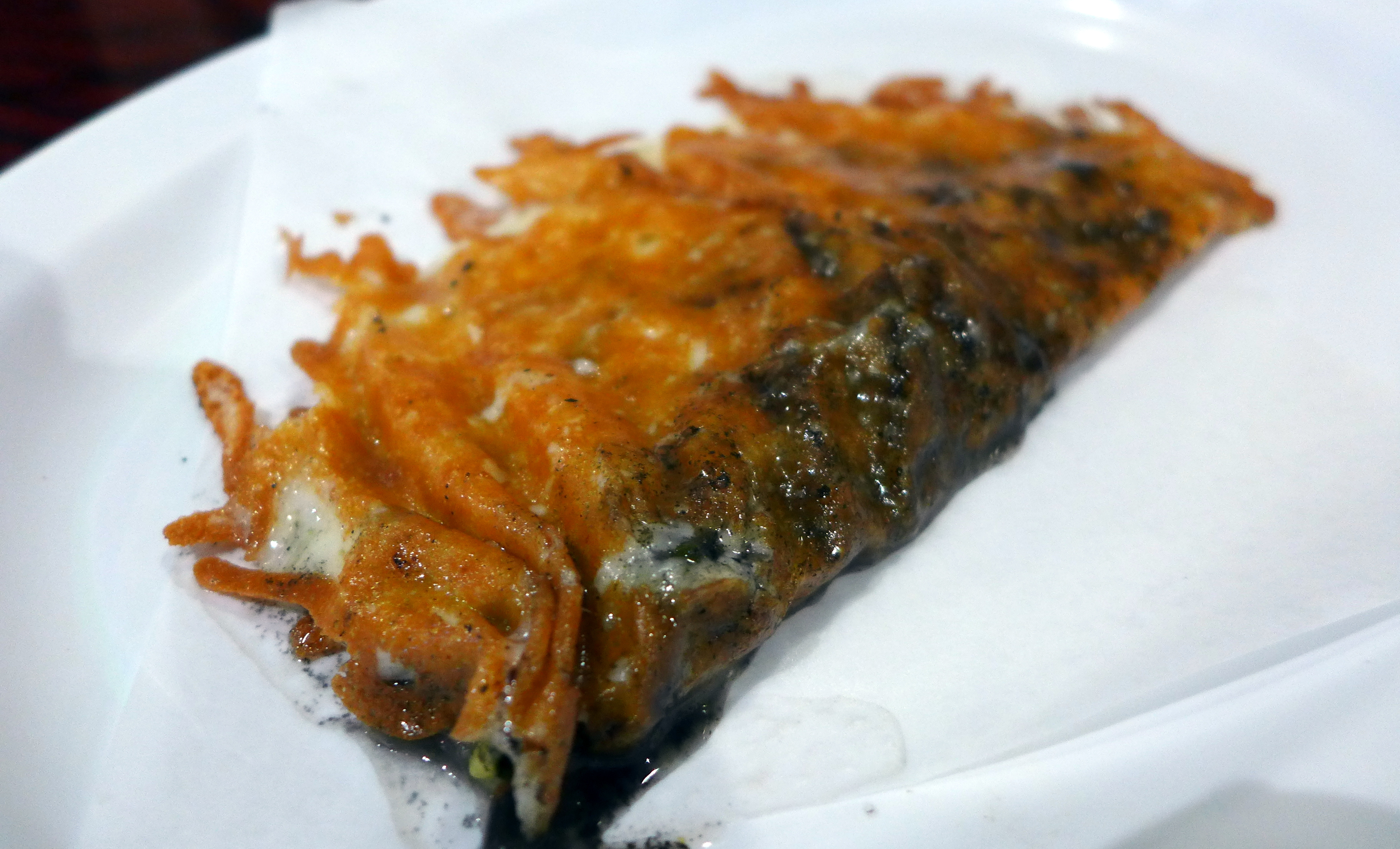
In one of the most unusual presentations I’ve ever seen, they brought out sort of a quesadilla that didn’t have a tortilla wrapper, but rather crunchy, toasted cheese instead. Filled with melted white cheese and huitlacoche, it was one of the most delicious things I’ve put in my mouth this year. Interestingly, I found that taking a bite of tortilla with it brought out the flavor of the cheese and the huitlacoche even more.

Here’s the website for Aquí es Texcoco: http://www.aquiestexcoco.com/

And the Olympic Mercado is where it always is – on Olympic Boulevard east of the fashion district.


Alejandro Paéz Varela – Musica Para Perros

image_1165_1_59552

Musica Para Perros – Music For Dogs – portrays the bleakest imaginable landscape, and the hopelessness of its inhabitants in an incongruously vivid and poetic style. It is a perfect third part of Alejandro Paéz Varela’s trilogy that he unofficially calls “los libros del desencanto” – books of disenchantment. It fits loosely with Corazón de Kaláshnikov and El Reino de las Moscas by virtue of geography and themes of hardship, alienation and desperation.

The story is a sort of rural La Ronde, in which the 3 main characters are interconnected in surprising ways, and the relationships come full circle in an unexpected but inevitable manner. We have original characters in original situations, great dialog, routine murder, love and betrayal, and the wonderful metaphor of a rag-tag zoo in the middle of nowhere.

As I read about Muchacho, who appeared on the ranch as a feral child, and was raised by the elderly cook, and about Flor a young prostitute whose dream is to go to Ciudad Juárez, I realized at some point that very little was happening, but I was still entranced. I’ve tried to take photographs of the nothingness of vast areas like the Chihuahua where the book takes place, but what typically comes out is nothing. The author, though, is able to paint the despair, the mundane routine and the constant sense of danger that make up the daily lives of these very ordinary people, and make us care about them. Descriptions of the most unremarkable events were both riveting and critical to the story. It felt like poetry at times.

It’s a highly successful novel, and is a strong finish to a beautifully conceived trilogy. I’m very glad to have read them all.

_________________________________________________________________

Desde Amazon:

Música para perros inicia con la historia de Muchacho, un joven sicario que con su flauta engatuza tanto a los perros como a las víctimas de su patrón, Liborio Labrada. ¿En qué momento y bajo qué circunstancias su destino se cruzará con el de Flor y Graciano? Tres historias se entrelazan en Música para perros de Alejandro Páez Varela, que a su vez se entrecruza con sus anteriores novelas, Corazón de Kaláshnikov y El reino de las moscas.

Tres destinos unidos por un mismo lazo, el de la miseria. Flor, Graciano y Muchacho son parte de un zoológico a cielo abierto donde los animales también muerden el polvo de la inmundicia, en el que se dan cita narcotraficantes y burdeles de poca monta. Música para perros también se desarrolla en pueblos perdidos en el vasto territorio de Chihuahua, siendo Ciudad Juárez “una gran ciudad, con oportunidades para todos” y el eje en torno del cual gira esta historia de amor y redención, de personajes que viven al límite de sus fuerzas; que harán todo por sobrevivir, aunque en ello les vaya la vida.

El trabajo de periodista de Alejandro Páez Varela lo ha hecho estar en permanente contacto con todo tipo de gente; de ellos rescata el habla de la calle, el humor y la tragedia para construir sus historias y personajes, tan vivos como las últimas noticias de la nota roja. En Música para perros podemos sentir la asfixia del calor, la desesperanza del olvido y podemos estar seguros que el dinero tampoco compra la tranquilo del sueño.

East LA Meets Napa 2014

AltaMed held its 9th annual East LA Meets Napa fundraiser last Friday evening, and I was lucky enough to be invited.

Established over 40 years ago, AltaMed is Southern California’s leading non-profit health care system delivering integrated primary care services, senior care programs and health and human services for the entire family.

The theme of the event is to showcase Southern California’s best Mexican restaurants, and the best Latino-owned wineries. It’s an inspired combination, and everyone put their best foot forward. News is getting out, and the event was sold out early, as I’m sure it will be next year, judging by the happy faces of the attendees.

P1030676-001

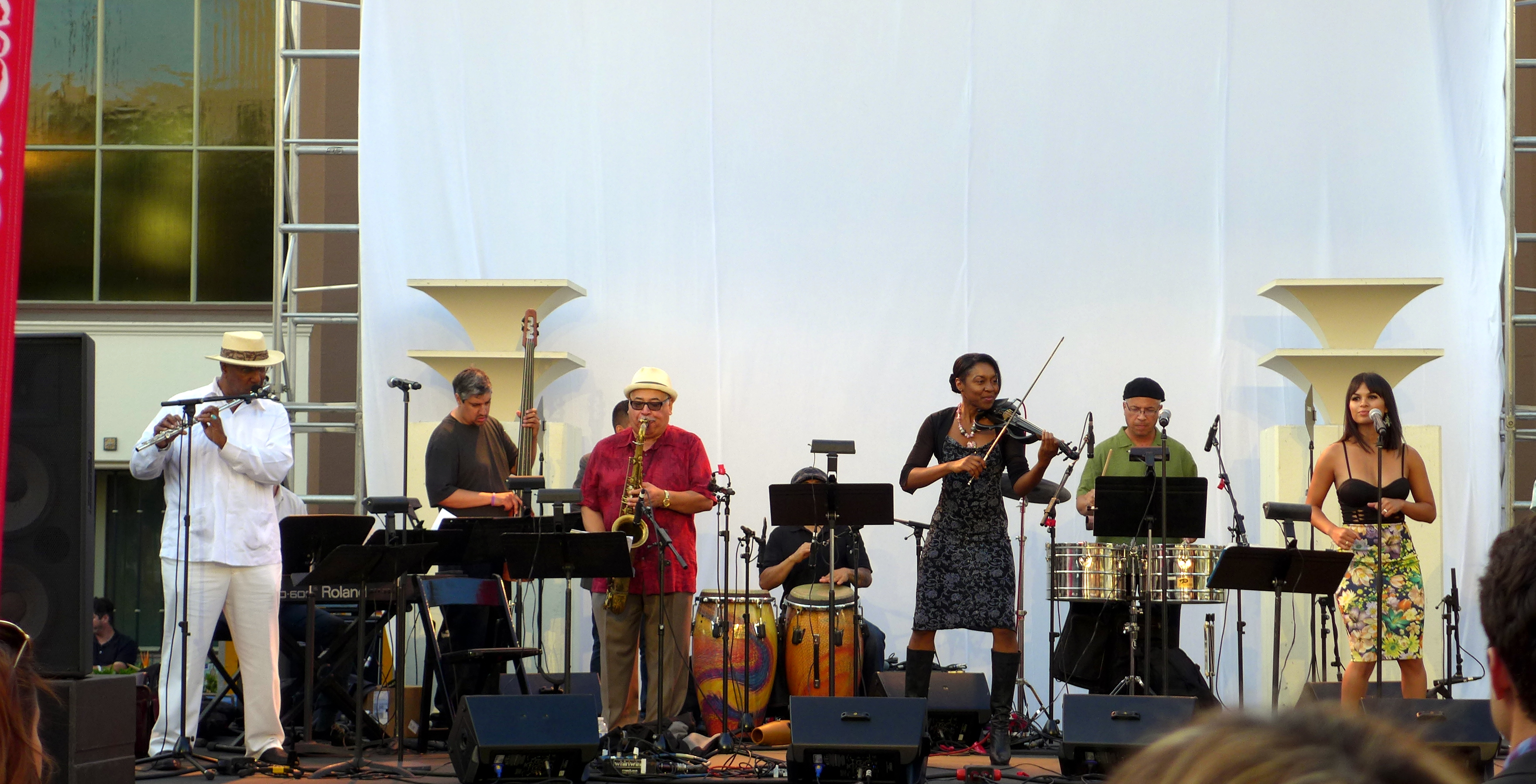
The location couldn’t have been more perfect… or more unexpected. We’ve all been to Union Station, but everyone is so focused on catching a train that very few people notice the lovely outdoor courtyards of this historic building. It provided a free flow that allowed us to listen to the great live music, meet new friends and sample delicious food and wines.

P1030529-001

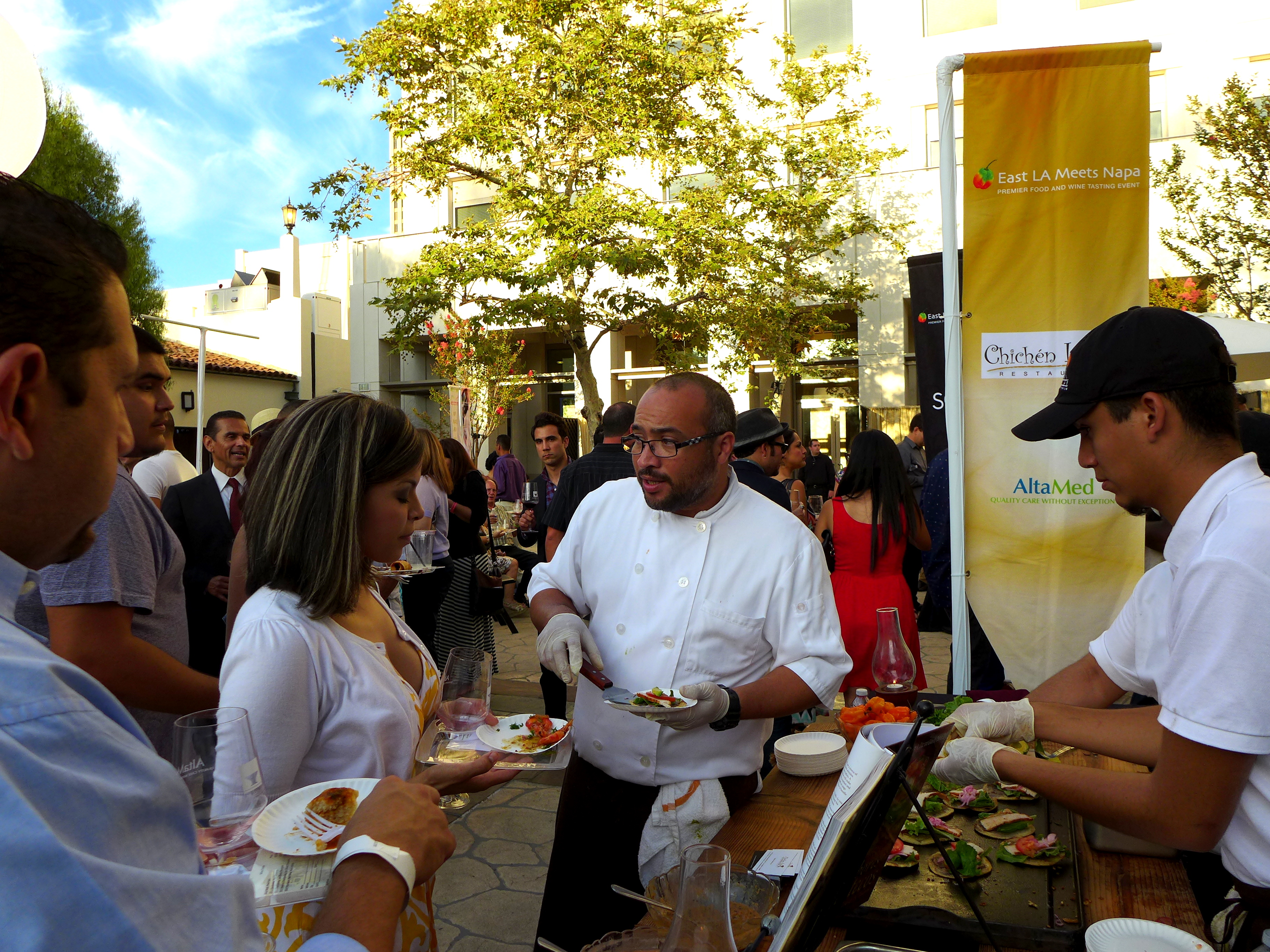
Each of the participating restaurants brought one or two of their signature dishes. Especially memorable were the chiles en nogada from La Huasteca, flautas de jamaica from Casa Oaxaca and the panuchos from Chichén Itzá. I was also delighted with dishes from La Parilla, Rivera Restaurant, Rocio’s Moles de los Dioses and several others. I even tried eating grasshopper for the first time… it was served in a salsa, so I could concentrate on the delicious flavor, and not the little beasts themselves.

P1030564-001

There were wonderful wines from Alex Sotelo Cellars, Gustavo Wines and Trujillo Wines. It was a temptation to visit Nevarez Vineyard, Luis Ochoa Family Vineyards, Delgadillo Cellars and others, but there was only one of me, and it was only one evening. I’ll be looking out for their wines in the future.

P1030484-001

The event was perfectly organized, and was a big success in all aspects. I was very fortunate to be a part of it. I have a list of restaurants that will keep me busy for months, and I’m already looking forward to next year.

P1030510-001

Hilario Peña – Juan Tres Dieciséis

juan

My rating: 4 1/2 stars

Hilario Peña’s Tijuana is a place where danger lurks around every corner, corruption is rampant, relationships are complex and often secret, loyalty is a rare commodity, and love conquers all.

Tomás Peralta is older and wiser than the tough kid who was chased out of Sinaloa a few years ago in Peña’s earlier novel Malasuerte en Tijuana. He has established himself as a private detective, and he needs all of his experience, instinct and luck to handle the cases he takes on in Juan Tres Dieciséis.

Juan Tres Dieciséis is a rising boxing superstar who has the good, or perhaps bad, fortune to be named after the bible verse John 3:16. His wife was recently murdered, and he is the prime suspect. It looks like an open-and-shut case for the police, but he hires Tomás to find the real murderer. There are many distractions along the way, though, that take Tomás from the highest to the lowest levels of Tijuana society. There are murderers, conniving women, revolutionaries, corrupt government officials and doctors with questionable ethics. Lorena Guzmán, the eponymous Mujer de los Hermanos Reyna, Peña’s terrific earlier novel, makes a memorable appearance. She has done well for herself, and is still unrelentingly sexy, and profoundly corrupt.

Peña never gives me what I expect, and that’s why I always enjoy his books. What started out to be a routine genre novel detoured into a skillfully written memoir of an up-and-coming young boxer, with some of the most riveting action sequences I’ve ever read. The author clearly loves the sport. From there, the book returns to the detective story, but it’s far from routine. The plot complexities and character development are laid on layer by layer, and build to a truly unexpected climax.

Juan Tres Dieciséis is a gripping noir novel, liberally laced with laugh-out-loud humor and that cynicism tempered with hope and optimism that is so unique to the Mexican sensibility.

I had a great time reading it.

YXTA – Gringas al Pastor

P1020464-001

I’ve passed by YXTA a number of times, but never had the opportunity to try it. I was curious, though, for two reasons. First, how in heck do you pronounce YXTA? Well, you do pronounce the X, so it sounds like “eeks-ta.” Second, what is an attractive, upscale-looking restaurant doing in that dreary stretch of downtown Los Angeles, surrounded by warehouses, distributors and factories? The answer to that is now a moot point, because YXTA is worth a trip, no matter where it’s located.

I was invited to a preview of AltaMed’s annual fund-raiser East L.A. Meets Napa, and we made a stop at YXTA for their wonderful tacos, and a sampling of Trujillo wines. The US vs Belgium World Cup game was playing on the TVs as we arrived, which fit perfectly with the casual restaurant/bar atmosphere, and added to the fun mood of the outing. Needless to say, we didn’t stay long enough to see the disappointing outcome of the game.

I’ve seen Gringas on menus in Mexico, but I’m pretty sure I haven’t seen them this side of the border. As we all know, a gringa in Latin America is an American, or english-speaking woman. In food parlance, though, it is a special type of taco. Wikipedia says the name may come from the dark spots on the grilled tortilla that resemble the freckles on a gringa’s skin.

The gringas at YXTA were beautifully roasted marinated pork (pastor), served on a flour tortilla with lots of gooey melted cheese, onions, cilantro, chile de arbol salsa and avocado salsa. The treatment was sort of like a quesadilla, but it packed a flavor punch way beyond any quesadilla I’ve ever been served – and that includes the Olympic Mercado where all the street vendors appear on Saturdays, not that far from YXTA.

I’m looking forward to seeing what YXTA is serving at the July 18 East L.A. Meets Napa main event. I’ll be delighted if they go with the Gringas, but whatever they decide, I know I’ll be a happy guy.

Here’s the website: http://yxta.net/

Chichén Itzá – Panuchos

P1020446-001

About 10 years ago, I did a double-take when I read an article in the Los Angeles Times about Chichén Itzá’s tacos de venado. How could a Yucatán style restaurant be more authentic if it served deer tacos? I don’t think they’re on the menu any more (they were wonderful, by the way), but I’ve been back many times since, to explore the consistently delicious regional cooking.

This afternoon, I was invited to a preview of AltaMed’s signature fund-raising event East L.A. Meets Napa. Owner Gilberto Cetina gave us a tour of the Mercado where the restaurant is located, and presented some of the highlights of the menu, as well as some interesting stories about Yucatán cuisine. I learned, for example, that Queso de Bola is actually Edam cheese that was introduced to the region by Dutch, uh… Pirates of the Caribbean.

The highlights today were the Panuchos. Unlike many Yucatán dishes, panuchos do not date back to the Mayans, but are a more recent, although still traditional concoction. The foundation is a tortilla that has been infused with a black bean puree, then fried. The topping is shredded turkey (!), pickled onion, lettuce, avocado and tomato. My fork didn’t offer much support, so I picked up my panucho (with Gilbero’s approval), folded it like a taco, and went to town.

Was it kind of like a taco? Well, yeah.. but it was more substantial and richer than most tacos. Earthy and satisfying in every way.

The great news is that Gilberto plans to serve Panuchos at the July 18 East L.A.Meets Napa main event. I’ll be first in line.

The address is: 3655 South Grand Avenue, Los Angeles, CA 90007
Telephone: (213)741-1075

So What Kind of Chile Should I Use?

Chiles

After my recent post on chile-laced tamarind ice cream, a friend sent me a recipe for cooked apples with ancho chile.

I wasn’t paying attention at the supermarket, and found myself with all the necessary ingredients except ancho chile. I’m a resourceful guy, so I thought “what the heck” and substituted chipotle… with disappointing results. I ended up with an oddly smoky, brown-sugary mess that just didn’t work with the sour granny smith apples.

That’s when I was reminded that it’s high time I learned the difference between the many different chiles.

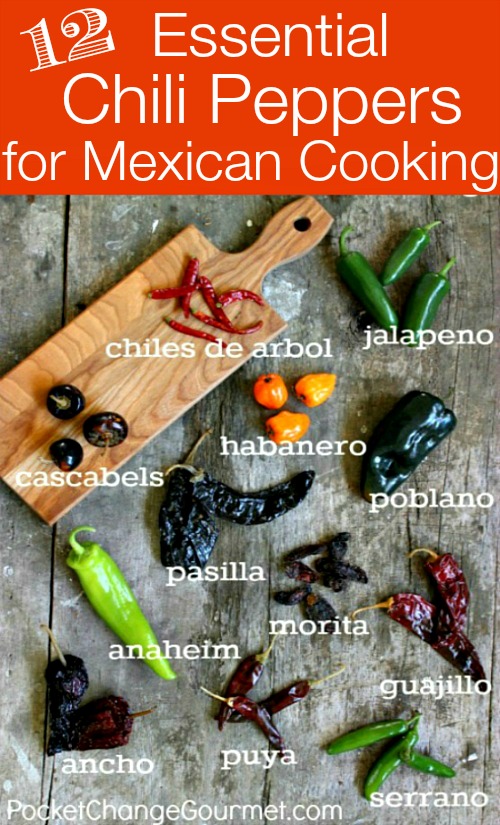
Here’s a great starting point. A summary that features 12 commonly available chiles, with a quick description of each, and an indication of their heat level.

I wasn’t surprised to see how hot the habaneros can be. I have a vivid memory of tasting a tiny dollop of habanero salsa one evening in Mérida, and pretty much ruining my dinner with the pain.

Here’s the link: http://pocketchangegourmet.com/12-essential-chile-peppers-for-mexican-cooking/